
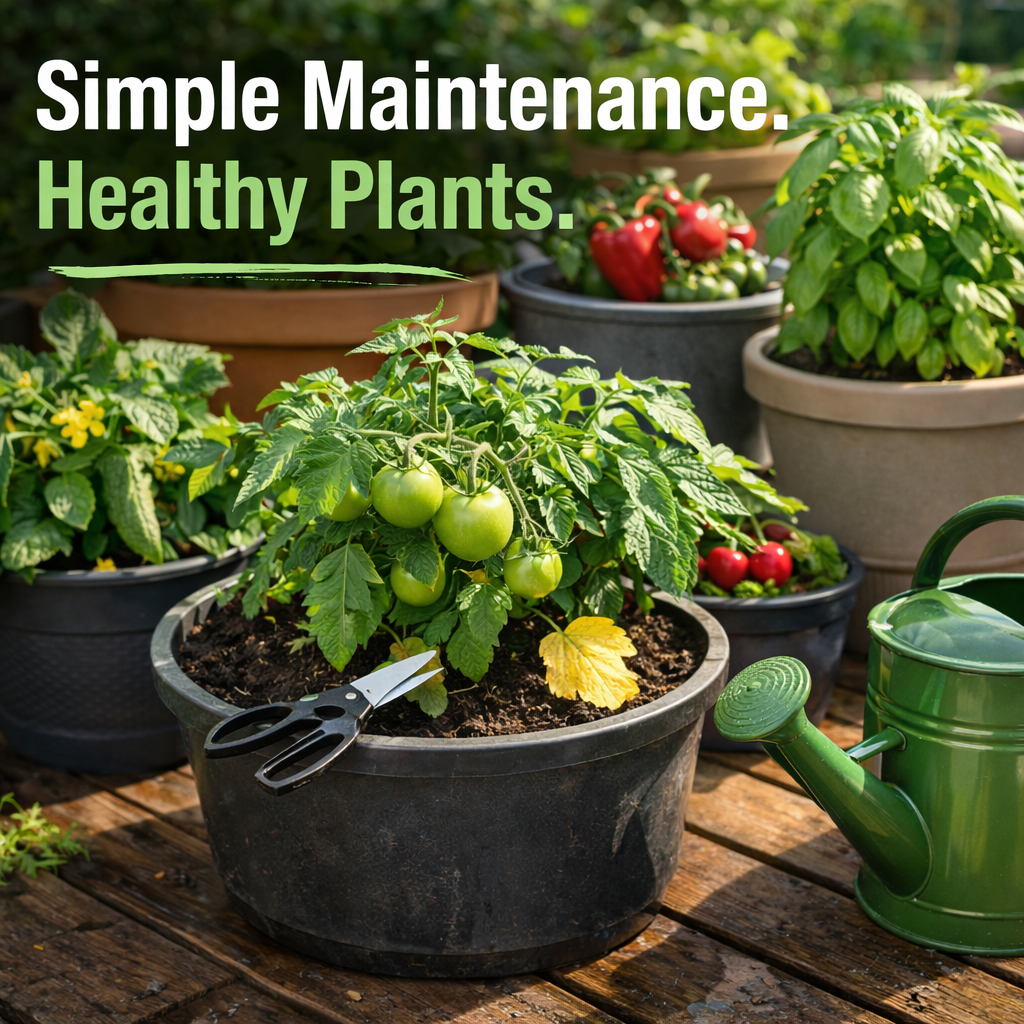
Keeping plants alive is one thing—keeping them healthy and productive throughout the season is another.
Once the growing season shifts into high gear, your plants need more than just water and sunlight—they need active care. Heat, rapid growth, sudden weather changes, even birds and animals … everything starts working against you. You can’t just plant them and water once a day and expect them to thrive.
The good news? You don’t need to do anything complicated.
With a few simple maintenance habits, you can keep your garden thriving—whether you’re growing in containers, raised beds, or a small backyard space.
💧 Build a Simple Watering Rhythm (Not Just “Water More”)
Watering isn’t about doing more—it’s about doing it right and consistently. Plants actually respond to a steady rhythm. When moisture levels stay predictable, roots grow stronger, stress stays lower, and plants adapt in a way that keeps them thriving.
👉 Your best tool? Your finger.
Stick your finger 1–2 inches into the soil—if it feels dry at that depth, it’s time to water. It’s simple, reliable, and far more accurate than guessing or sticking to a rigid schedule.
Keep it dialed in:
- Water deeply, not just the surface
- Early morning is best (less evaporation, better uptake)
- Containers dry out faster than in-ground plants
When you get the rhythm right, plants don’t just survive—they stay happy, steady, and productive.
✂️ Prune and Trim to Keep Growth Strong
Plants don’t just grow—they focus their energy where it matters most. When a plant gets overcrowded or stretched out, it wastes energy trying to support growth that isn’t helping it thrive.
Pruning helps shift that energy back into strong stems, healthy leaves, and better production.
Keep it simple:
- Remove overcrowded growth (opens up light and space)
- Trim leggy stems (encourages fuller, stronger growth)
- Pinch herbs regularly (basil, mint, etc.) to keep them bushy
- Support airflow through the plant (helps prevent disease)
💡 Think of pruning as guiding where the plant puts its effort—not just cutting it back.
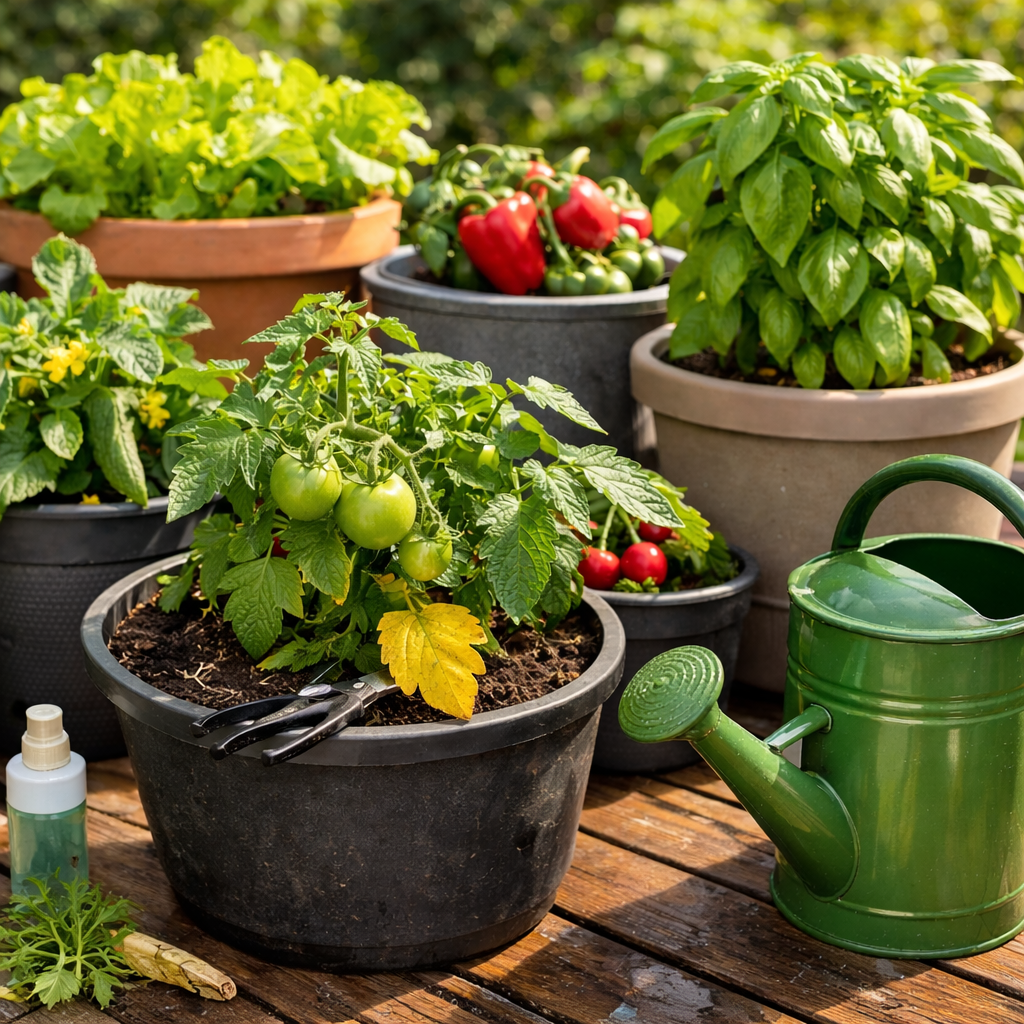
🍂 Remove Dead or Damaged Growth Early
One of the most important plant maintenance tasks is also one of the most overlooked.
Make this a habit!
Plants don’t clean themselves up. Dead and damaged growth sticks around, dragging the plant down and creating space for problems to start.
Watch for:
- Yellowing leaves
- Dead or brittle stems
- Leaves with spots or signs of disease
Removing these early helps:
- Prevent disease from spreading
- Improve airflow through the plant
- Keep energy focused on healthy growth
💡 A quick check every few days makes a bigger difference than a big cleanup later.
🔍 Spot Problems Before They Get Out of Hand
In any garden, small problems can sneak up on you and turn into big ones fast. In containers, it happens even faster.
Limited soil, tighter roots, and faster drying conditions mean issues don’t take long to show—or spread.
Keep an eye out for:
- Wilting even when soil is moist
- Yellowing or curling leaves
- Chewed edges or holes (pests)
- White spots, mildew, or discoloration
Sometimes the problem is not pests or fertilizer at all—it may be tired potting mix that needs attention. If that sounds familiar, see Fix Your Soil First.
Catching problems early gives you simple fixes. Waiting too long usually means bigger work—or losing the plant entirely.
💡 A quick glance daily is often all it takes to stay ahead of problems.
👉 Watch This: Fixing Common Container Garden Problems
🌱 Feed Lightly (Don’t Overdo It)
All plants need nutrients to grow—whether they’re in the ground, raised beds, or containers. But in small spaces, those nutrients get used up faster.
In containers especially, there’s only so much soil to work with. Watering, plant growth, and heat all gradually drain nutrients out of that limited space. That’s why container plants often need light, consistent feeding to keep up.
Keep it simple:
- Use a balanced fertilizer or compost
- Feed every 2–4 weeks (depending on the plant)
- Avoid heavy feeding during extreme heat
💡 Compost is your best friend here—it feeds slowly, improves soil structure, and helps hold moisture at the same time.
Learn how to create nutrient-rich compost in small spaces
🌞 Adjust for Weather Changes 🌞 Adjust for Weather Changes (Stay Flexible)
If perfect growing conditions existed, we wouldn’t need to maintain our plants—we’d just plant and harvest all year long.
But that’s not reality.
Weather shifts, temperatures swing, and conditions change fast—especially in small or urban spaces. And in containers, those effects are amplified. Soil heats up faster, dries out quicker, and reacts more dramatically to sudden changes.
The key isn’t reacting big… it’s adjusting small.
Stay ahead with simple shifts:
- Heat waves → water slightly more often
- Storms → check drainage and look for damage
- Wind → support tall or top-heavy plants
👉 Small adjustments keep plants steady. Big reactions usually mean you’re already behind.
🧠 Keep It Simple and Consistent
Life is complicated enough—plant maintenance doesn’t have to be. Keep it simple, stay consistent, and your plants will do the rest.
You don’t need a complicated routine. Just a few quick checks done regularly will make all the difference in the world.
👉 Focus on:
- Checking soil moisture
- Quick pruning and trimming
- Removing dead or damaged growth
- Watching for changes
That’s it.
💡 10–15 minutes a day can keep your entire garden healthy, steady, and productive through the entire growing season.
👉 Container gardening maintenance tips from the Old Farmer’s Almanac
🌿 What Healthy Plants Should Look Like
When your maintenance is working, you won’t notice anything dramatic—and that’s exactly the point. Your plants will look about the same as yesterday… maybe just a little fuller, a little stronger.
That steady, almost boring progress is what healthy growth looks like.
Skip a day or two though, and things can change fast—especially in containers when the heat is on.
When things are going right, you’ll see:
- Steady, consistent growth
- Deep green, healthy leaves
- Strong, upright stems
- Fewer pest or disease issues
If something feels “off,” it usually is—trust that instinct and take a closer loo