
Think composting is messy, smelly, or only for big backyards and not small spaces? That’s wrong.
Composting in small spaces, whether it’s a small house, duplex, or even an apartment is do-able—you just need the right setup.
🌱 Why Composting Matters (Even Composting in Small Spaces)
Compost does more than just add nutrients—it improves how your soil works.
It helps soil stay loose instead of compacted, holds moisture without getting soggy, and feeds plants slowly over time.
During the composting process, heat builds up and helps break down material. What you’re left with is a stable, plant-friendly addition to your soil.
Growing in small spaces typically means containers. In containers, there’s no natural system to fix things for you—compost helps fill that gap.
👉 If your soil feels “dead,” compost brings it back to life.
🔥 The Hidden Benefit: Heat and Breakdown
During the composting process, temperatures can get surprisingly high.
That heat helps:
- Break down organic material faster
- Reduce harmful pathogens
- Destroy most weed seeds
What you’re left with is a more stable, plant-friendly material that’s ready to go into your soil mix.
🟤 What Compost Actually Does
When you add compost to your soil, you’re doing a few key things:
- Improving soil structure
Helps soil stay loose and airy instead of compacted - Boosting water retention (without getting soggy)
Holds moisture where plants need it, but still drains well - Adding slow-release nutrients
Feeds plants steadily instead of all at once - Supporting beneficial microbes
Healthy soil life = healthier plants
🌿 Why Compost Matters Even More in Containers
In nature, soil is constantly being refreshed.
In containers?
👉 What you start with is what you’ve got.
There are:
- No worms moving nutrients around
- No natural breakdown of organic matter
- No system fixing mistakes for you
Compost helps rebuild that missing system.
See the related post: How to Make Container Soil That Works
⚡ Simple Rule
👉 If your soil feels “dead,” compost will bring it back to life.
🪴 Best Composting Methods for Small Spaces
You don’t need a big setup to compost—just something that works.
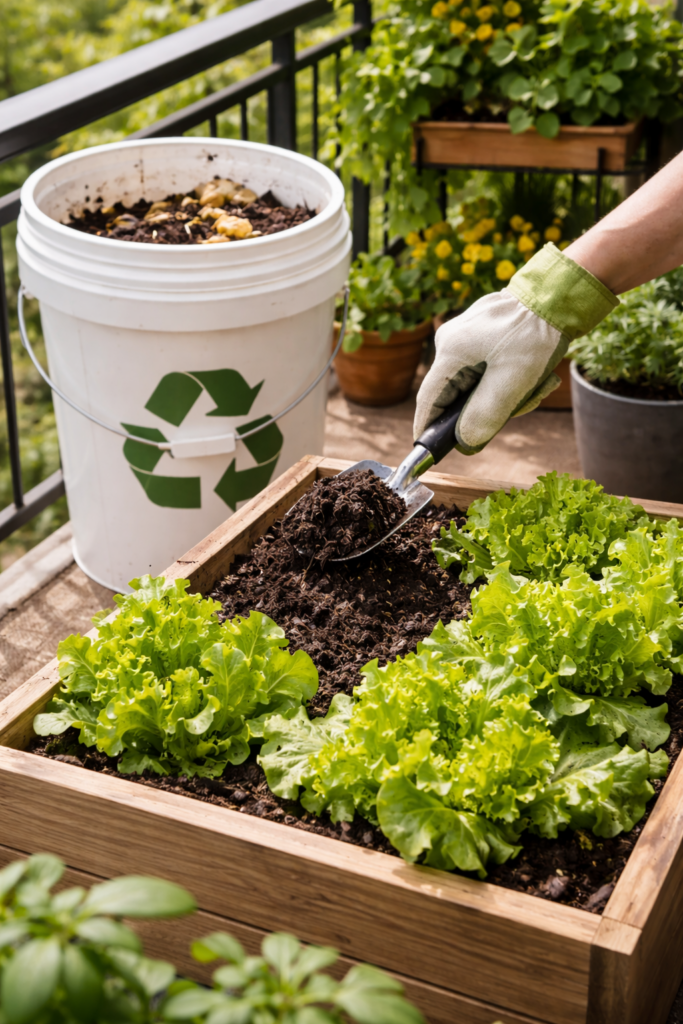
I’ve used a 2½-gallon bucket with a lid and airlock (like the kind used in homebrewing). It controls odor well, but opening it indoors can be an issue.
Other easy options:
- Sealed bucket – simple, but can smell if not managed
- Bokashi – fast, low odor, great indoors
- Worm bin – rich compost, takes a little getting used to
- Countertop composter (electric) – fast and low-odor, breaks scraps down in hours. Not true composting, but still a clean, effective way to turn scraps into a usable soil amendment.
👉 If you’re really tight on space, a Bokashi system is worth a look. It uses a special bran (a microbial starter) to ferment food scraps instead of letting them rot, which keeps odor to a minimum. You add scraps in layers, sprinkle the bran, and keep it sealed. Once it’s broken down, you can mix it into your soil or compost to finish the process.
If you want to build a simple, low-cost compost setup at home, this video from “V87 Garden” shows a practical DIY approach that works well in small spaces. (2) How to Make Compost at Home | Kitchen Waste Compost Update – YouTube
👉 The best method is the one you’ll actually stick with. If your pile or bin ever gets neglected, compacted, or starts smelling off, check out my guide on How to Revive a Neglected Compost Bin (Simple Steps That Work).
🌳 Got a Little More Room?
If you’ve got a yard, patio, or even a small outdoor space, a rotary tumbler or compost bin makes things even easier.
These setups give you:
- More space to work with
- Better airflow for faster breakdown
- Less concern about smell or mess
They’re a great step up if you find yourself composting regularly and want a more “hands-off” system.
👉 But no matter the setup—small bucket or full bin—you’re doing the same thing: turning waste into something your soil actually needs.