
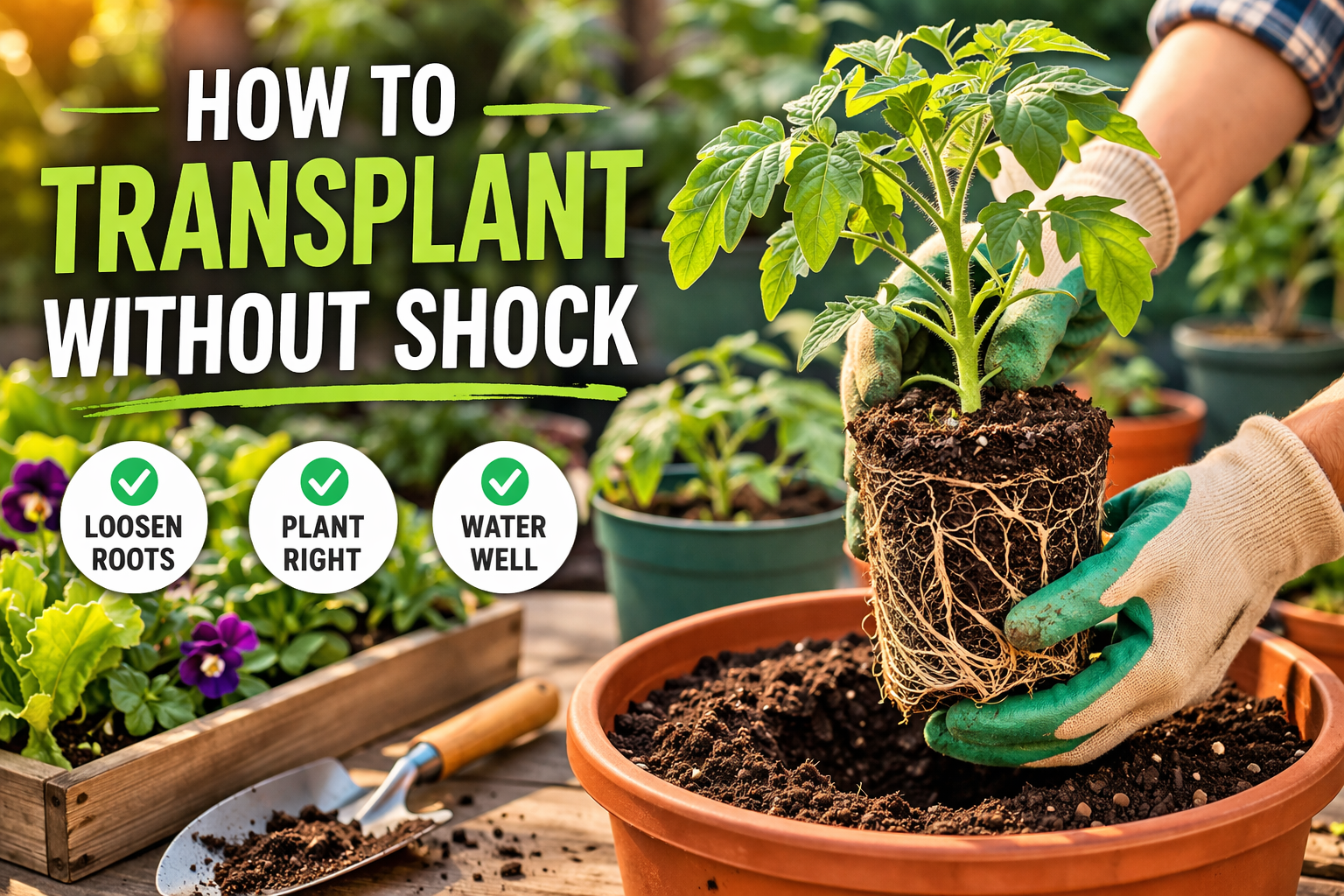
💡 How to Transplant Without Shock (7 Simple Steps That Work)
Transplanting seems simple — but it’s one of the fastest ways to set your plants back if you get it wrong.
Wilting, stalled growth, and yellowing leaves aren’t random… these are signs of transplant shock (a common issue well documented by university extension programs like Cornell)
The good news? It’s almost completely avoidable.
With a few simple steps, you can move your plants without stressing them — and keep them growing like nothing ever happened.
Here are 7 simple steps to help your plants settle in smoothly and avoid shock.
🛠️ The 7 Simple Steps
1. 💧 Pre-Water the Soil (Don’t Skip This)
Water your soil 12–24 hours before transplanting so it’s evenly moist — not dry, not soggy.
Moist soil protects the roots during the move. It also helps them settle in and start growing again.
If the soil is too dry, roots struggle right away. If it’s too wet, you risk compaction and damage.
This comes first for a reason — it has the biggest impact on your results.
👉 Let the water soak in, then come back and water once more.
👉 When planting, you can also add a little water (or a light fertilizer mix) into the hole for a quick boost.
👉 Aim for soil that feels like a wrung-out sponge — damp, not dripping.
2. 🌱 Loosen the Roots (Don’t Destroy Them)
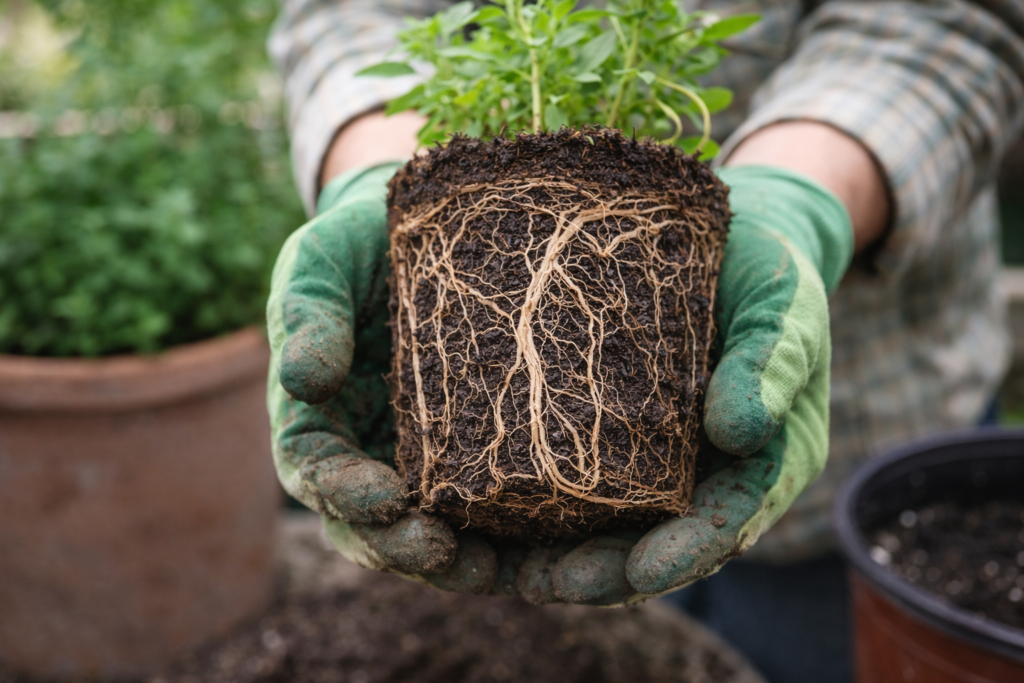
This step is just behind step one in importance — and it makes a big difference.
If roots stay in a tight, pot-bound pattern, they’ll keep growing that way. That makes it harder for them to spread into new soil.
Gently loosening the root ball helps roots grow outward. It also improves anchoring and nutrient uptake.
👉 If the root ball is tight, lightly tease the outer roots with your fingers.
👉 For stubborn plants, soak the root ball for 5–30 minutes (or longer if needed).
👉 Don’t overdo it — the goal is to guide the roots, be gentle.
3. 🪴 Use the Right Soil (This One Matters)
When you transplant, the soil becomes your plant’s entire environment.
If it’s heavy or drains poorly, roots struggle to spread and grow.
Good soil does the opposite. It gives roots space, holds moisture, and drains excess water.
👉 Use a light, well-draining mix that still holds some moisture.
👉 A blend of potting mix, compost, and perlite or vermiculite works well.
👉 Avoid heavy garden soil in containers — it compacts easily.
👉 If your soil isn’t right, transplanting won’t fix anything — it just moves the problem. See my guide on building the right soil for containers.
Learn how to make your own quality container soil.
4. 🌤️ Match the Environment (Don’t Shock the Plant)
You’re not just moving roots — you’re changing the plant’s environment.
Sudden changes in light, temperature, or wind can stress the plant just as much as root disturbance.
The goal is consistency, then gradual adjustment.
👉 If a plant was in partial shade, don’t move it straight into full sun.
👉 If it was indoors or protected, give it time to adjust to wind and temperature.
👉 Even small changes can cause stress if they happen too quickly.
👉 A gradual transition helps the plant recover faster and keep growing. Start with a few hours outside, then increase daily.
5. 🌅 Transplant During Cool Hours (Timing Matters)
Transplanting in the heat adds stress when the plant is already vulnerable.
Disturbed roots can’t take up water efficiently. Heat and sun make moisture loss worse.
👉 That’s when shock hits hardest.
Transplanting in the evening or on a cloudy day gives your plant time to settle in.
👉 Late afternoon or early evening works best.
👉 Cooler temperatures reduce water loss and stress.
👉 It also gives roots time to recover overnight.
👉 If you must transplant during the day, provide temporary shade.
6. 🚿 Water Immediately After (Don’t Skip This)
Right after transplanting, your plant needs water — no delay.
The roots need moisture to recover and settle into the soil.
Watering helps the soil settle and removes air pockets. It also improves root contact.
👉 Water thoroughly so the root zone is fully moist.
👉 This reduces shock and rehydrates the plant quickly.
👉 It also encourages roots to spread and establish.
👉 After that, keep soil consistently moist (not soggy).
👉 Good watering can be the difference between a struggling plant… and one that takes off.
7. ⏳ Hold Off On Fertilizer (Give Roots Time)
Right after transplanting, your plant isn’t ready for fertilizer — it’s focused on recovery.
Adding fertilizer too soon can stress or burn delicate roots.
👉 Give the plant time to re-establish its root system.
👉 Wait 1–2 weeks, or until you see new growth.
👉 Then begin feeding lightly.
👉 Strong roots first — fertilizer comes after.
💡 Bonus Tips (Make It Even Easier)
- Give temporary shade
- Protect from wind
- Keep moisture consistent
👉 This is where you add value without messing up your title promise
⚠️ Common Transplanting Mistakes That Cause Shock
Transplant shock happens when roots get stressed and can’t take up water properly.
The result? Wilting, stalled growth, yellowing leaves — or worse.
Here are the most common mistakes to avoid:
🌱 1. Skipping Hardening Off
Indoor plants aren’t ready for full sun, wind, or temperature swings.
👉 Ease them outside over 7–10 days, starting in shade (a process known as hardening off, recommended by university extension programs like UVM)
🌡️ 2. Planting Too Early
Warm-season plants don’t like cold nights.
👉 Wait until temps stay consistently above 50°F.
⏰ 3. Transplanting at the Wrong Time
Midday heat = instant stress.
👉 Transplant early morning, late afternoon, or on a cloudy day.
🌿 4. Damaging Roots
Rough handling or forcing roots into place slows everything down.
👉 Be gentle, and guide roots — don’t crush them.
💧 5. Watering Mistakes
Too little = stress. Too much = root problems.
👉 Pre-water, then water in well after planting.
🪴 6. Poor Soil
Compacted or lifeless soil makes it hard for roots to establish.
👉 Loosen it up and add compost if needed.
📏 7. Planting Too Deep or Too Shallow
Wrong depth can stall growth fast.
👉 Keep the plant at the same depth it was growing before.
🌿 8. Overcrowding
Plants need room to spread roots and grow.
👉 Give them proper spacing from the start.
☀️ 9. No Post-Transplant Protection
New plants are sensitive for a few days.
👉 Provide light shade and steady moisture while they settle in.
🧱 10. Using the Wrong Soil
Not all soil works for every plant.
👉 Match your soil to your plant — especially in containers.
🌟 Quick Wrap-Up
Avoid these mistakes, and you’ll eliminate most transplant shock before it even starts.
Get the timing right, treat the roots well, and give your plants a smooth transition — they’ll take off like nothing ever happened.