There are times when a gardener sees weak growth, yellow leaves, or drooping plants and immediately reaches for the fertilizer. Sometimes that works—for a while. However, many plant problems begin below the surface.
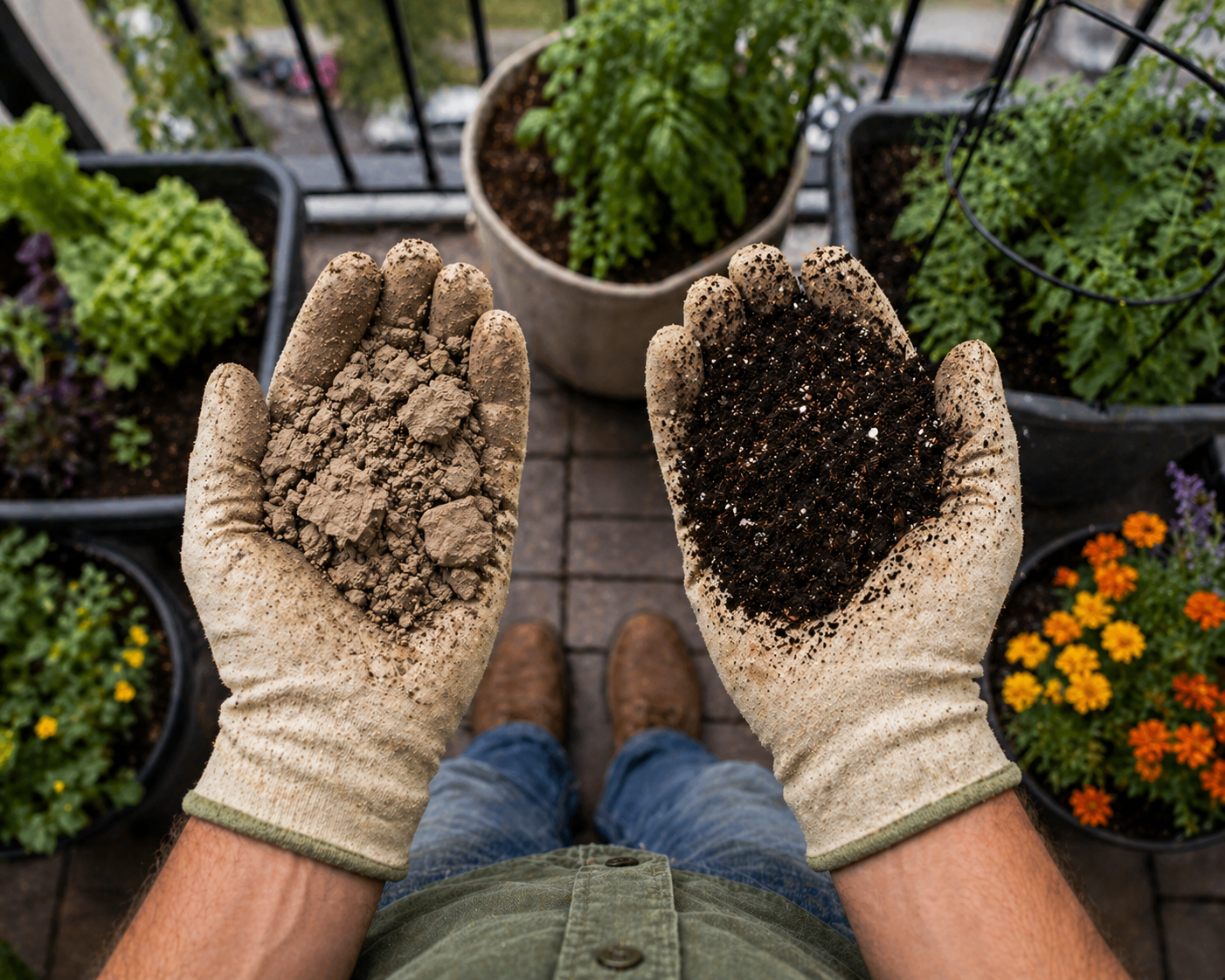
Look at your soil. Touch it, poke it, crumble it, and get to know what you are working with. If the soil is compacted, dried out, drains poorly, or lacks organic matter, fertilizer alone may provide a short boost, but the real issue remains. You will continue fighting the same problems until you fix the soil itself.
That is why I like to think of fertilizer as the final step—not the first one.
👉 Before you fertilize, fix your soil first.
🪴 Why Fertilizer Alone Doesn’t Solve Everything
Fertilizer can help plants grow, but it is chemistry, not magic.
Plants need healthy roots and workable soil before they can make full use of added nutrients. If roots are stressed by soggy soil, a bone-dry mix, or hard compacted dirt, fertilizer often cannot do much.
Many new gardeners assume weak plants must be hungry plants, and sometimes they are. However, just as often they are struggling because their growing environment is failing them.
You can feed a plant all day long, but if the roots are trapped in poor soil, progress will be limited.
👉 Fertilizer supports growth. Soil makes growth possible.
🌿 Good Soil Helps Plants Use Nutrients
While it is true that one of soil’s basic jobs is to hold a plant upright, healthy soil does far more than that. It creates the conditions roots need to grow, absorb nutrients, and help plants truly thrive.
Good soil helps by:
- Holding moisture evenly
- Draining excess water
- Allowing oxygen to reach roots
- Supporting beneficial microbial life
- Giving roots room to spread
- Holding nutrients until plants need them
When these basics are in place, fertilizer becomes far more effective. When your soil is healthy, plants often need feeding less frequently.
Good soil has almost no drawbacks.
Roots can access water more easily, nutrients stay available longer, and plants grow stronger and recover faster.
👉 If your potting mix feels weak, dry, or lifeless, start with my guide on How to Make Container Soil That Works before adding more fertilizer.
🚨 Signs Your Soil Is the Real Problem
Your soil may be the issue if plants keep struggling even after watering and feeding.
One of the biggest indicators I watch for is this:
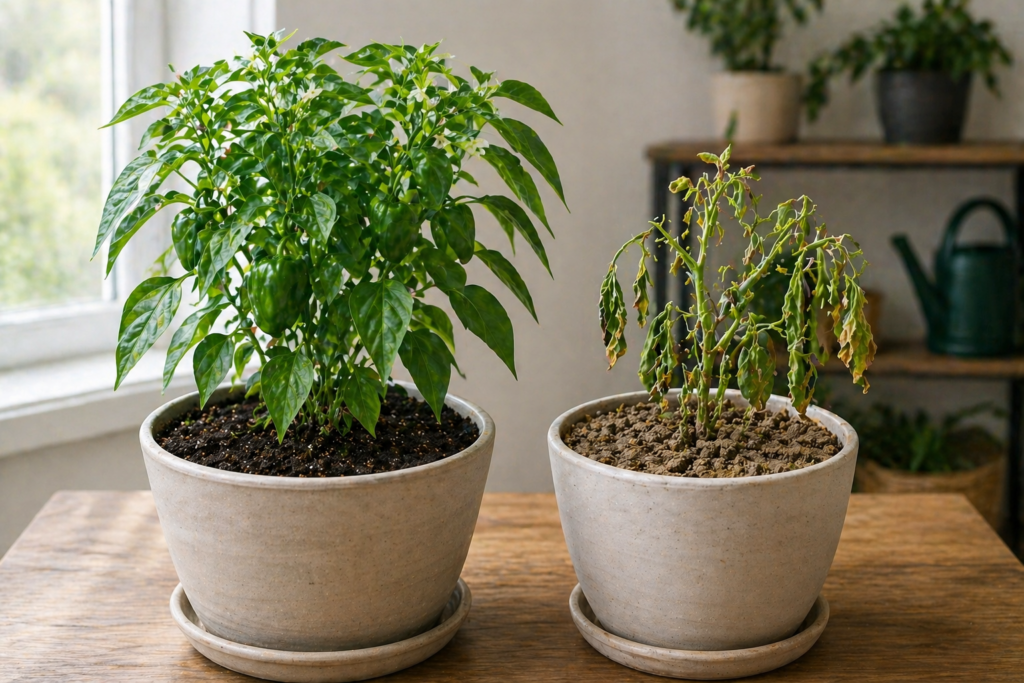
👉 If your plants do not perk up after feeding—or they perk up briefly and then fade again—the real problem is often the soil.
Healthy soil helps roots absorb water and nutrients steadily. Poor soil may cause nutrients to wash through too fast, remain unavailable, or stress the roots so badly that fertilizer cannot help for long.
Watch for warning signs like:
- Water running straight through the pot
- Soil pulling away from the sides
- Mix staying soggy for days
- Weak growth despite fertilizer
- Yellowing leaves that do not improve
- Hard, crusty, compacted soil
- Plants wilting soon after watering
👉 In many cases, fertilizer is not failing—the soil is.
🧱 How to Improve Cheap Potting Mix
Cheap potting mix is not always useless, but it often needs help. Using bargain mixes straight out of the bag may work sometimes, but more often you will notice your plants simply do not perform well.
Some bargain mixes dry out too fast, compact easily, or contain very little organic matter. Others may look fine at first but break down quickly after a few waterings.
But there is a Silver Lining! Weak potting soil can often be improved.
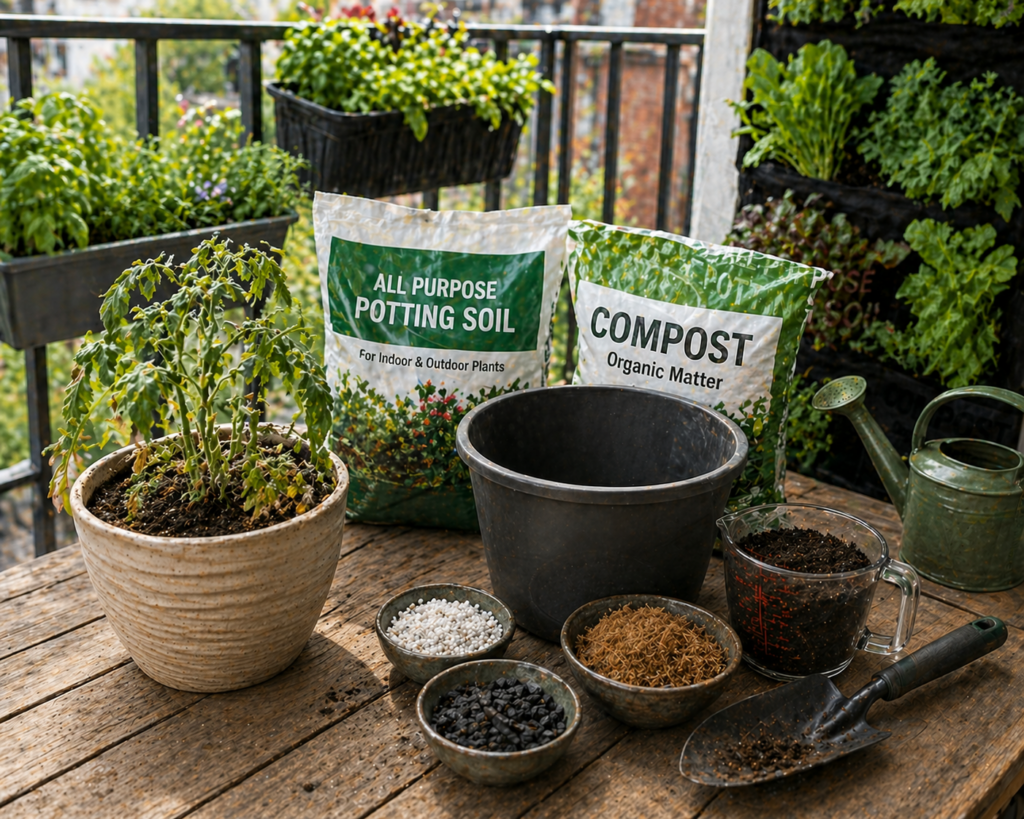
Try mixing in:
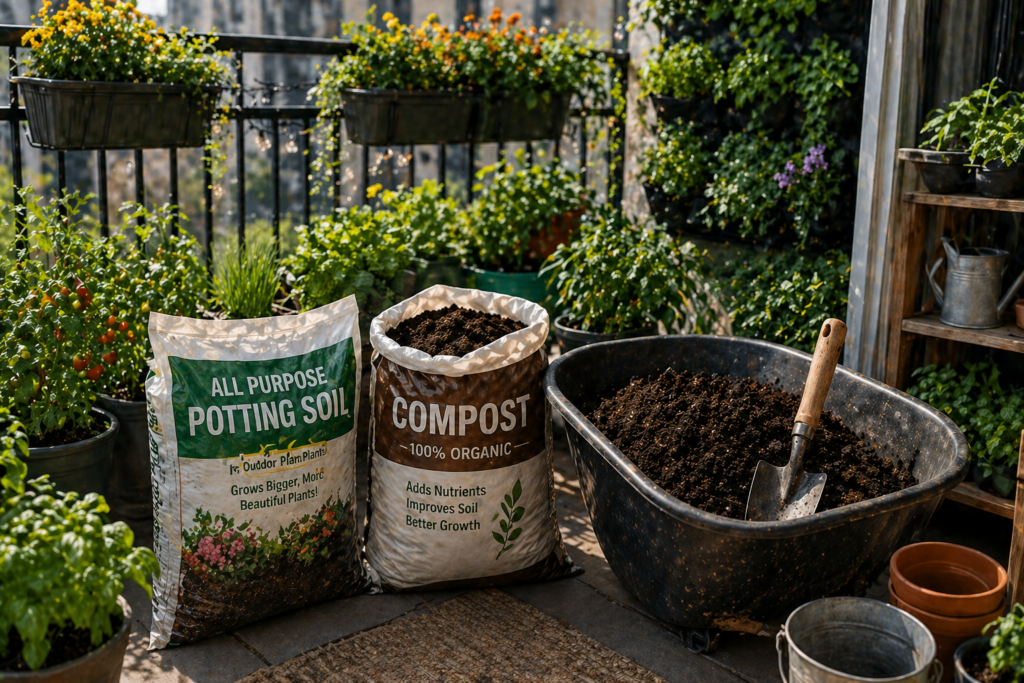
- Compost for nutrients and soil life
- Perlite for drainage and airflow
- Coco coir or peat moss for moisture retention
- Worm castings for a gentle nutrient boost
- Slow-release organic fertilizer once the mix is balanced
The goal is not just to feed the plant.
The goal is to build a better, healthier growing environment.
👉 A stronger soil mix often solves problems fertilizer never could.
♻️ Rejuvenate Old Potting Soil When Re-Potting
When a plant outgrows its container, many people automatically toss the old soil and start fresh.
Over the years, I have found that most of the time this is not necessary. In many cases, that old soil still has plenty of life left in it.
Used potting soil can often be refreshed and reused with great results.
Start by gently loosening the root ball and removing old roots or compacted clumps. If thick roots are circling the pot, trim or loosen them before repotting.
Next, break up the old mix and blend in fresh organic matter such as compost or worm castings to restore nutrients and life.
If the soil has become dry, dusty, or drains too quickly, add moisture-retaining ingredients like peat moss or coco coir.
This helps the soil hold water more evenly again.
The result is a revitalized mix that gives your larger plant a healthier new home—without wasting perfectly usable soil.
👉 Old soil is often tired, not useless.
🌾 Best Fertilizers Once Soil Is Ready
Once your soil holds moisture, drains well, and supports healthy roots, the stage is set, and fertilizer can do its job much better.
Good beginner-friendly choices include:
- Compost
- Worm castings
- Fish emulsion
- Liquid seaweed
- Balanced organic granular fertilizer
- Slow-release container fertilizer
For container gardens, start light.
Pots have limited soil volume, so nutrients can build up faster than they do in in-ground beds.
👉 More fertilizer is not always better.
🌟 Final Thoughts
Before you fertilize, take a closer look at your soil. Unless you grow strictly with hydroponics, soil is the most important part of the equation.
Weak plants are not always hungry plants. Sometimes they are growing in soil that cannot hold water, drain properly, or support healthy roots.
Fix your soil first, then fertilize.
Your plants will have a much better chance of using the nutrients you give them—and you may be surprised how often healthier soil is the real solution.