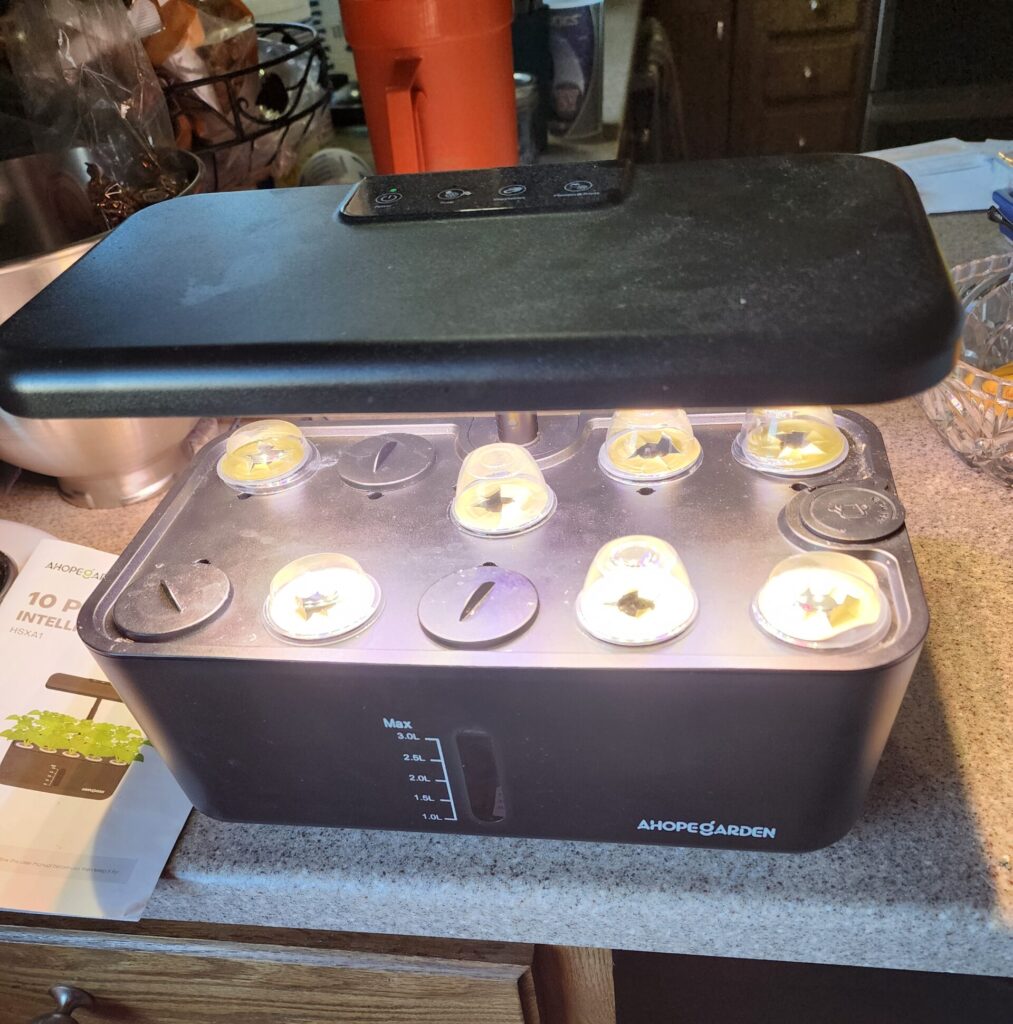
Right now, I’ve got two small hydroponic systems running — a 10-pod planter with lettuce just getting started, and a 12-pod system packed with herbs.
I’ll be honest — hydroponics is new to me and I was a little skeptical at first.
But after seeing how well the first system performed, that changed pretty quickly… enough that I went ahead and picked up a second unit.
This isn’t a deep dive into hydroponics or a technical breakdown.
This is what it actually looks like to run a small system at home — what works, what doesn’t, and what you should expect if you’re thinking about trying one.
🌱 My Current Setup
🪴 12-Pod System (Herbs)
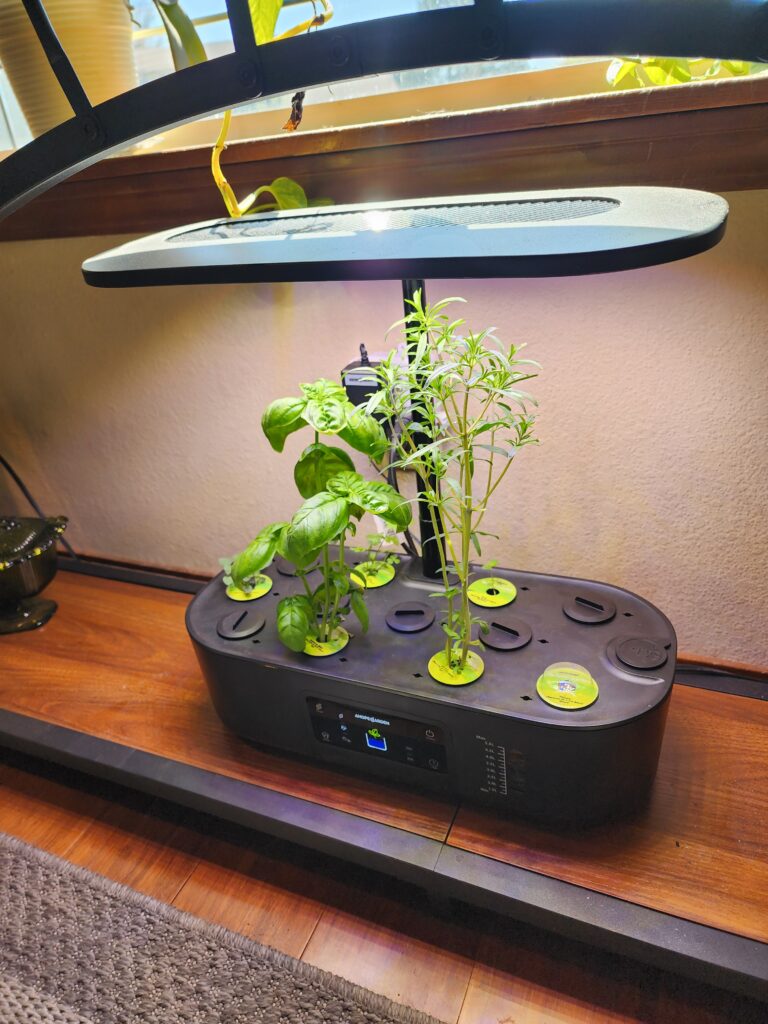
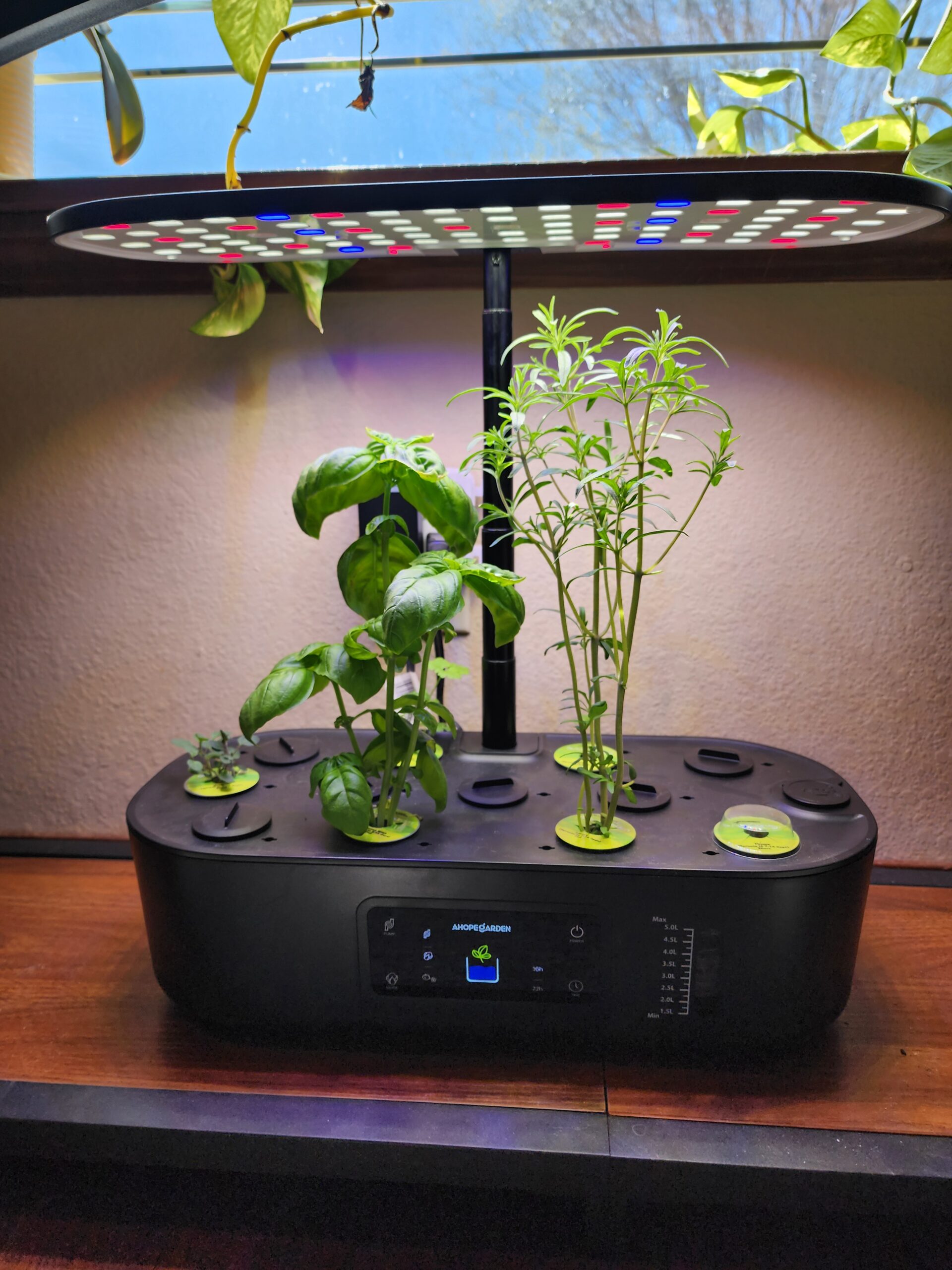
This is the one that’s been up and running the longest. The 12 Pod System is newer and this is it’s first crop.
Basil and savory are front and center, and both have done really well. It’s a great example of how herbs thrive in small hydro systems — steady growth, minimal fuss.
👉 Nothing fancy — just consistent results.
🪴 10-Pod System (Lettuce)
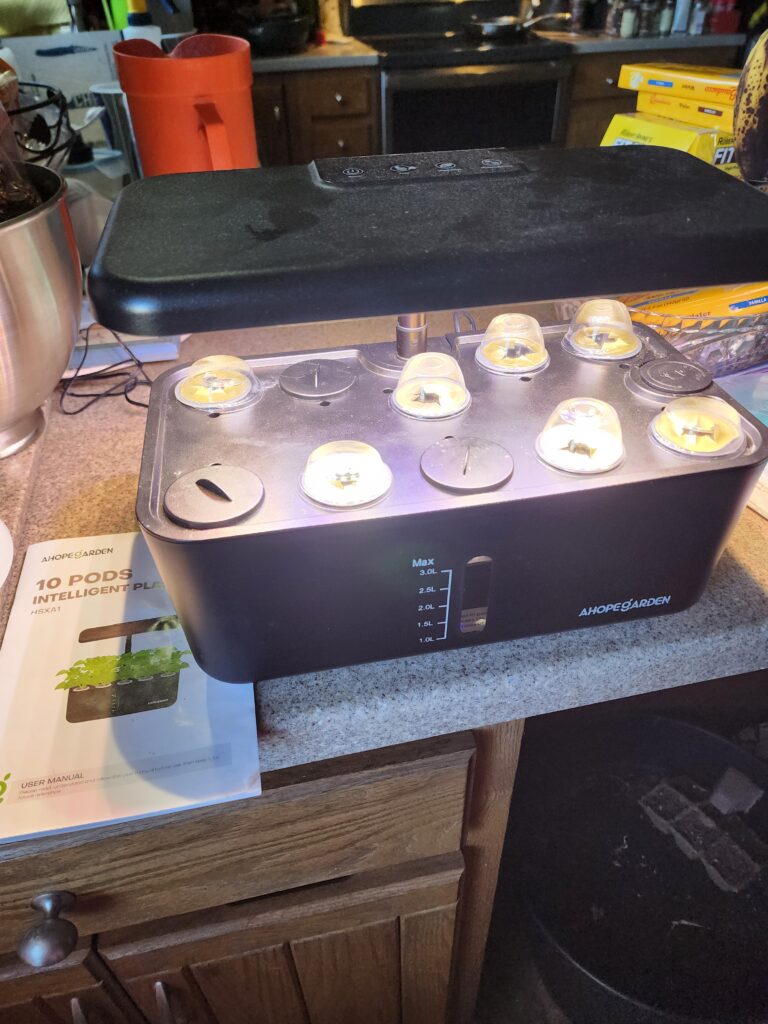
I just planted Black Seeded Simpson lettuce in the 10-pod system, so this one is just getting started — this will be its third crop.
Lettuce is one of the easiest and fastest crops for hydroponics, so it should fill in quickly.
👉 This will give a clear side-by-side comparison as both systems develop.
⚙️ 10 vs 12 Pod Systems (Is There a Real Difference?)
Honestly — not much.
You’re really just getting:
- A couple of extra grow spots
- A slightly larger water reservoir
- Same great results
👉 Same function. Same maintenance. Same ease of use.
If you’re choosing between sizes, don’t overthink it — I went with what fit my space.
👉 Watch this quick video on choosing the best mini hydroponic system from Green Living Off Grid.
🌿 What Grows Best in Small Hydro Systems
These systems really shine with smaller, fast-growing plants:
- Lettuce ✔ (quick, reliable, and beginner-friendly)
- Herbs ✔ (basil, savory, parsley, cilantro — they thrive in hydro)
- Spinach ✔ (does well in cooler indoor conditions)
- Dwarf tomatoes ✔ (compact varieties can produce surprisingly well)
- Small peppers ✔ (like mini bell or chili types)
👉 If you keep it simple, these systems perform very well.
🌱 A Real-World Tip (From Experience)
Not everything grows equally in a small system.
Lettuce and herbs are almost effortless.
Tomatoes and peppers need a little more attention. They need:
- more light
- more nutrients
- and a little more patience
👉 Think of those as your “next step” once you’re comfortable. If you’re still choosing a system, my AeroGarden vs Other Countertop Hydroponic Systems comparison can help you decide what fits best.
⚠️ What to Watch For
Even though they’re easy to use, small systems still need a little attention:
- Plants crowding each other
- Light height (too close or too far)
- Water levels and nutrient balance
- Cleaning and resetting the system between crops
👉 Dump the old water, rinse the tank, and start fresh before planting again.
👉 Stay on top of these, and things stay smooth.
💧 Maintenance (Simple Routine That Works)
This is where small hydro systems really stand out — the routine is simple:
- Check the water level
- Add nutrients as needed
- Trim plants regularly
👉 Don’t skip the trimming — cutting back herbs and greens encourages fuller, faster growth and keeps plants from getting leggy.
👉 Nutrients — I add nutrients on a 10 to 12 day cycle. I’m trying out 1/2 dose per week to see how well that does.
🔗 Soil vs Hydro (Quick Perspective)
Hydroponics takes soil out of the equation, but the goal is still the same:
👉 Give plants what they need — consistently.
If you’re still growing in containers, having the right soil mix makes all the difference. I break it down step-by-step in my guide on “How to make container soil that actually works“
🌱 Understanding the Planting Medium (How These Systems Actually Hold Plants)
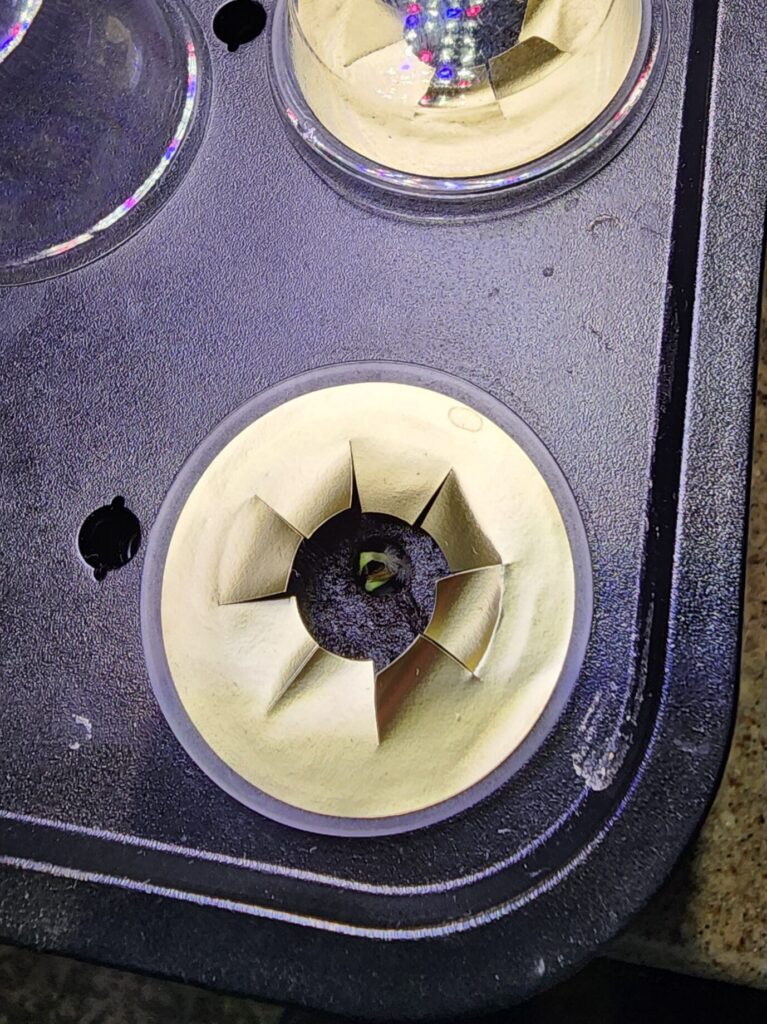
One thing that surprises people with small hydroponic systems is how simple the planting setup really is.
Each plant grows in a small sponge-like medium with a hole in the center where the seed goes.
That sponge sits inside a plastic cage (or basket), which is what actually drops into the system and makes contact with the water below.
👉 The roots grow down through the sponge and into the nutrient-rich water.
🧩 What Each Piece Does
- Sponge (growing medium)
Holds moisture and supports the seed while it sprouts and grows - Planting hole (center)
Where you place your seeds - Cage / basket
Keeps everything in place and allows roots to grow freely into the water
🌿 Extra Pieces You’ll See
Most small hydro systems also come with:
- Humidity domes
👉 Help trap moisture and speed up germination - Hole covers (caps)
👉 Used to block light from unused holes (helps prevent algae growth)
🎯 Real-World Tip
These systems are designed to be simple—don’t overthink the medium.
👉 The sponge stays in the water, and germination time depends on the seed. Don’t be fooled by what you see on top—I have a thyme pod with no visible growth yet, but the roots underneath are already long and established.