I’ll be honest — hydroponics is still new to me and the truth is I wasn’t completely sold at first.
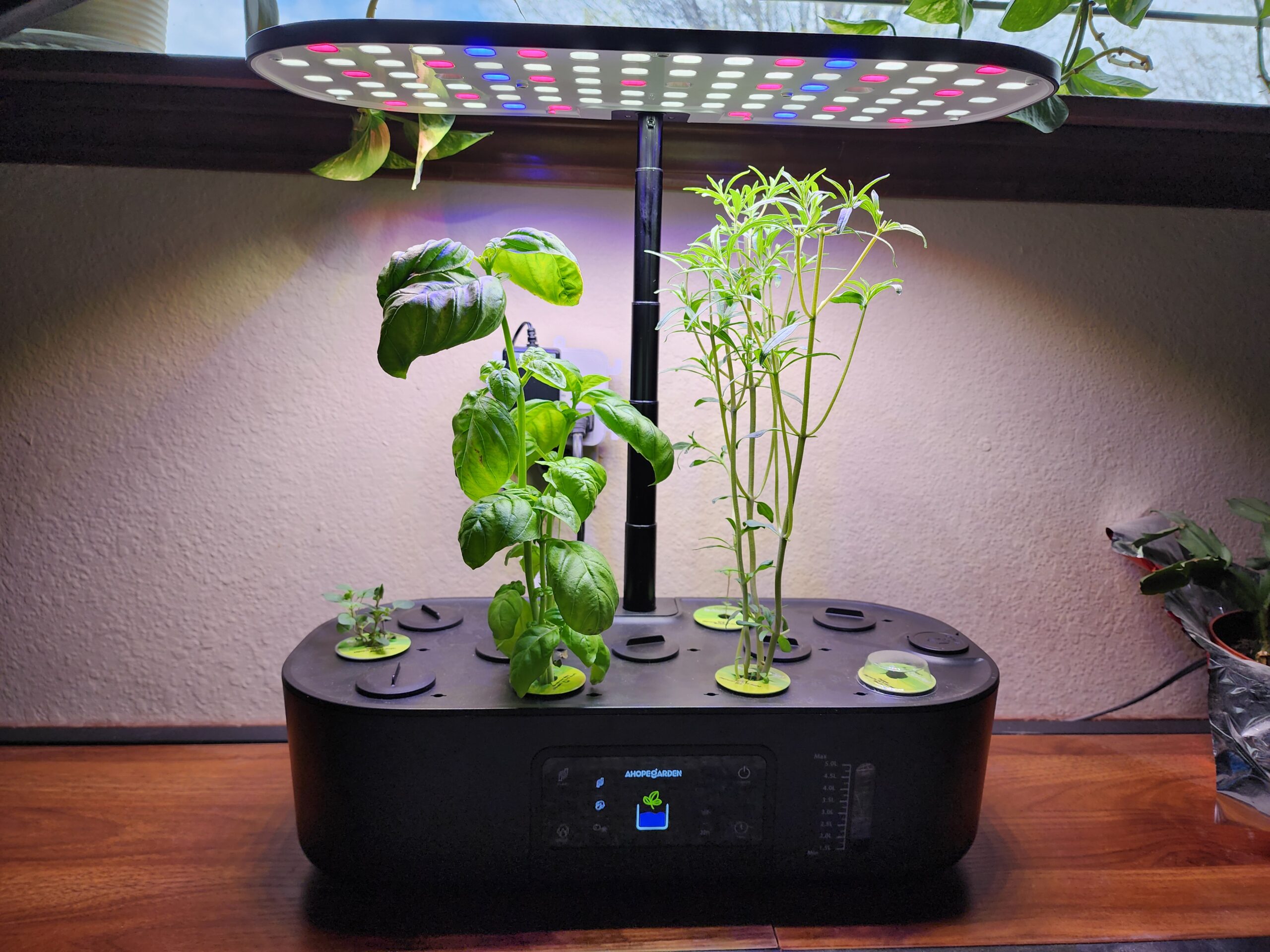
But after running a small countertop system, that’s changed enough to the point where I went out and bought a second larger one. Then I got a third unit. I have lettuce growing in the 2 smaller units and I rotate them by having one of them that we use daily to eat from and the other has the next crop going.
Right now:
- The two 10-pod systems grow lettuce. One for the ready to eat lettuce and another is getting the next crop started
- The 12-pod system is full of herbs. I have found that Basil grows fast!
This isn’t a technical deep dive.
👉 This is what actually works in small hydro systems — and what doesn’t — based on real use.
🌿 Why These Systems Work So Well (It’s Not an Accident)
Small countertop hydroponic systems aren’t trying to replace traditional gardening — they’ve been designed to fill a very specific niche.
👉 And they do it extremely well.
These units are engineered for:
- Compact spaces (kitchens, counters, apartments)
- Low-maintenance growing
- Fast, shallow-rooted plants
- Consistent, controlled conditions
That last part is the key.
Unlike outdoor or even container gardening, these systems remove a lot of the variables and surprises:
- No soil inconsistency
- No guessing on watering
- Stable light (built-in grow lights)
- Controlled nutrient delivery
👉 Everything is dialed in for reliable, repeatable growth. If you’re comparing brands and features, check out my related guide: AeroGarden vs Other Countertop Hydroponic Systems.
🌿 What Grows Well in Countertop Hydroponics
🥬 Lettuce (Top Performer)
Lettuce is about as reliable as it gets.
- Fast germination
- Quick harvest
- Doesn’t outgrow the system
👉 Varieties like Black Seeded Simpson are perfect.
🌿 Herbs (Best Overall Choice)
This is where these systems really shine.
- Basil
- Savory
- Thyme
- Mint
👉 Steady growth, easy maintenance, and you can harvest continuously.
💡 Tip: Trimming actually encourages more growth — don’t be afraid to use what you grow.
🌱 Other Good Candidates (With Some Limits)
These work well, but require a little extra attention:
- Spinach
- Dwarf tomatoes
- Small peppers
👉 They need:
- More light
- More nutrients
- More space awareness
⚠️ What Doesn’t Grow Well (Or Isn’t Worth It)
🥦 Large or Bulky Plants
Avoid things like:
- Broccoli
- Cauliflower
- Full-size tomatoes
- Iceberg lettuce
👉 It’s pretty obvious when you think about it — these systems are small, and large plants just don’t fit long-term.
👉 They simply outgrow the system — both above and below the surface.
.
🌽 Deep Root Crops
- Carrots
- Potatoes
- Onions
👉 Root crops rely on soil structure — hydro systems don’t support them well.
.
🌿 Plants That Crowd Easily
Even good plants can become a problem if:
- Leaves block light
- Roots tangle too much
- Airflow gets restricted
👉 Small systems fill up faster than you think.
🧪 A Quick Note on the Growing Medium
These systems use:
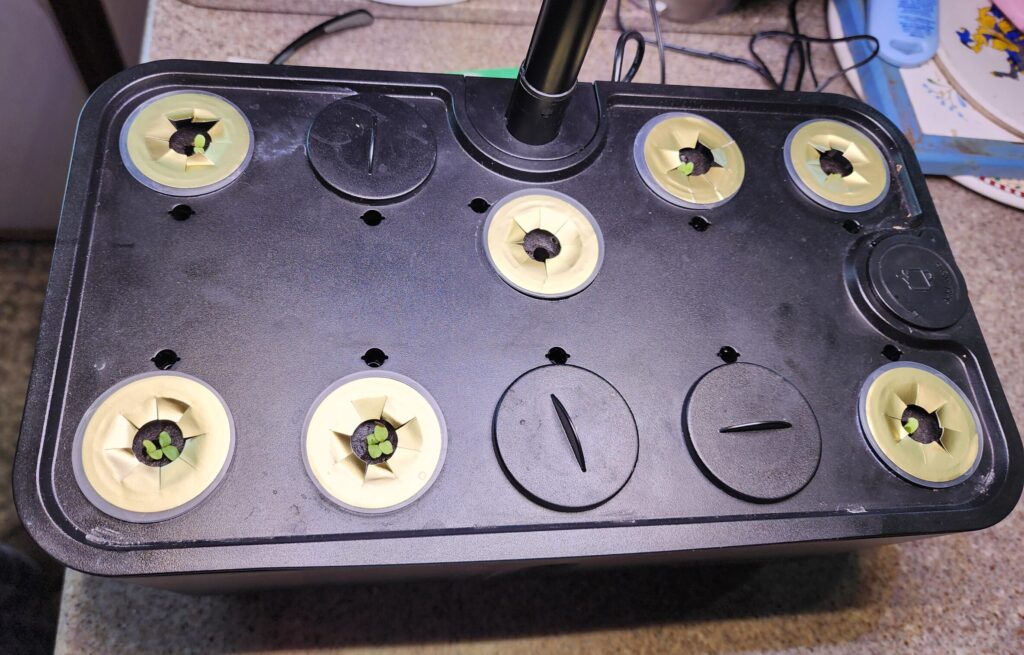
- A sponge-like growing plug
- A small plastic cage that holds it in place
👉 The roots grow down into the water, while the plant stays supported up top by the cage, or basket.
👉 Germination time depends on the plant — some seem to jump out of the sponge while others will leave you waiting. Thyme is a good example… it can look like nothing’s happening but pull it up out of the water and you’ll find a solid root system already growing.
💧 Nutrients & Maintenance (Simple Reality)
You don’t need to overthink it.
👉 What’s working for me:
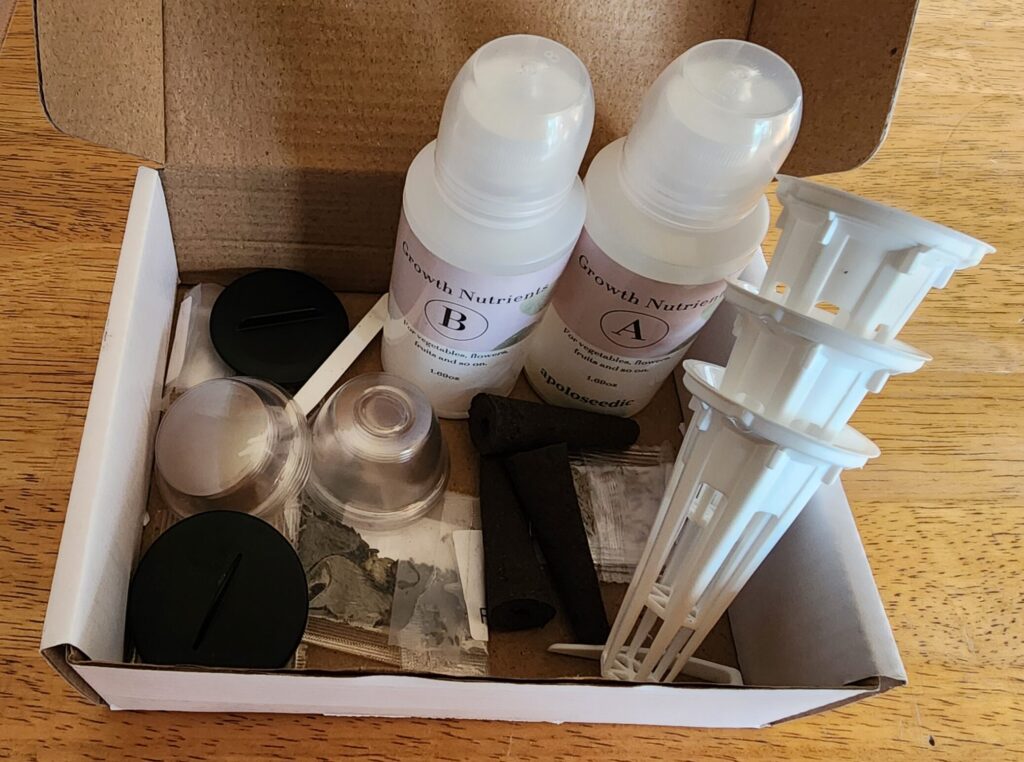
- Add nutrients at ½ strength once a week
- Keep water levels consistent
- Trim plants regularly to promote growth
👉 Every now and then:
- Dump the water
- Rinse the tank
- Start fresh between plantings
That reset keeps things clean and prevents issues.
✂️ Root Pruning: The Secret to Keeping Your System Running Smooth
In small hydroponic systems, roots don’t just grow — they take over if you let them.
👉 That’s where root pruning comes in.
🌱 Why Root Pruning Matters
Over time, healthy plants will send out long, dense root systems that can:
- Crowd the reservoir
- Tangle together between pods
- Block water flow
- Interfere with the pump
👉 Left alone, roots can literally overwhelm the system.
💡 What Pruning Actually Does
Trimming the roots might feel wrong at first—but it actually helps the plant.
- Encourages new, healthy root growth
- Keeps roots compact and manageable
- Improves water circulation and oxygen flow
- Prevents system slowdowns or pump issues
👉 Think of it like trimming the top of a plant — it comes back stronger.
⚙️ When to Do It
You don’t need to overthink this.
👉 If you notice:
- Roots filling the tank
- Roots reaching the pump
- Slower water movement
…it’s time for a quick trim.
⚠️ Don’t Overdo It (Quick Tip)
Root pruning is safe — as long as you keep it light and clean.
👉 Stick to these simple rules:
- Trim no more than 20–30% of the roots at one time
- Use clean scissors (this is important — I wipe mine down with disinfectant wipes before trimming)
- Focus on long, stringy roots, not the dense core
- Never cut right up into the plant base
👉 Think of it as a light haircut, not a major chop.
✂️ Simple Rule
👉 Keep the roots controlled, not crowded — and your system will stay clean, efficient, and productive.
⚖️ Soil vs Hydro (Quick Perspective)
Hydroponics removes soil from the equation…
…but the goal is still the same:
👉 Give plants what they need — consistently.
(👉 I still use soil as my primary growing method — if you do too, check out my “How to Make Container Soil That Works” post)
⚠️ What to Watch For
Even easy systems need a little attention:
- Plants crowding each other
- Light too close or too far
- Water/nutrient imbalance
👉 Stay ahead of these, and things stay simple.
🧠 Final Thoughts
Countertop hydroponics isn’t complicated…
👉 as long as you grow the right things.
Start simple:
- Lettuce
- Herbs
Then experiment from there.
That’s exactly what I’m doing — and it’s working.