
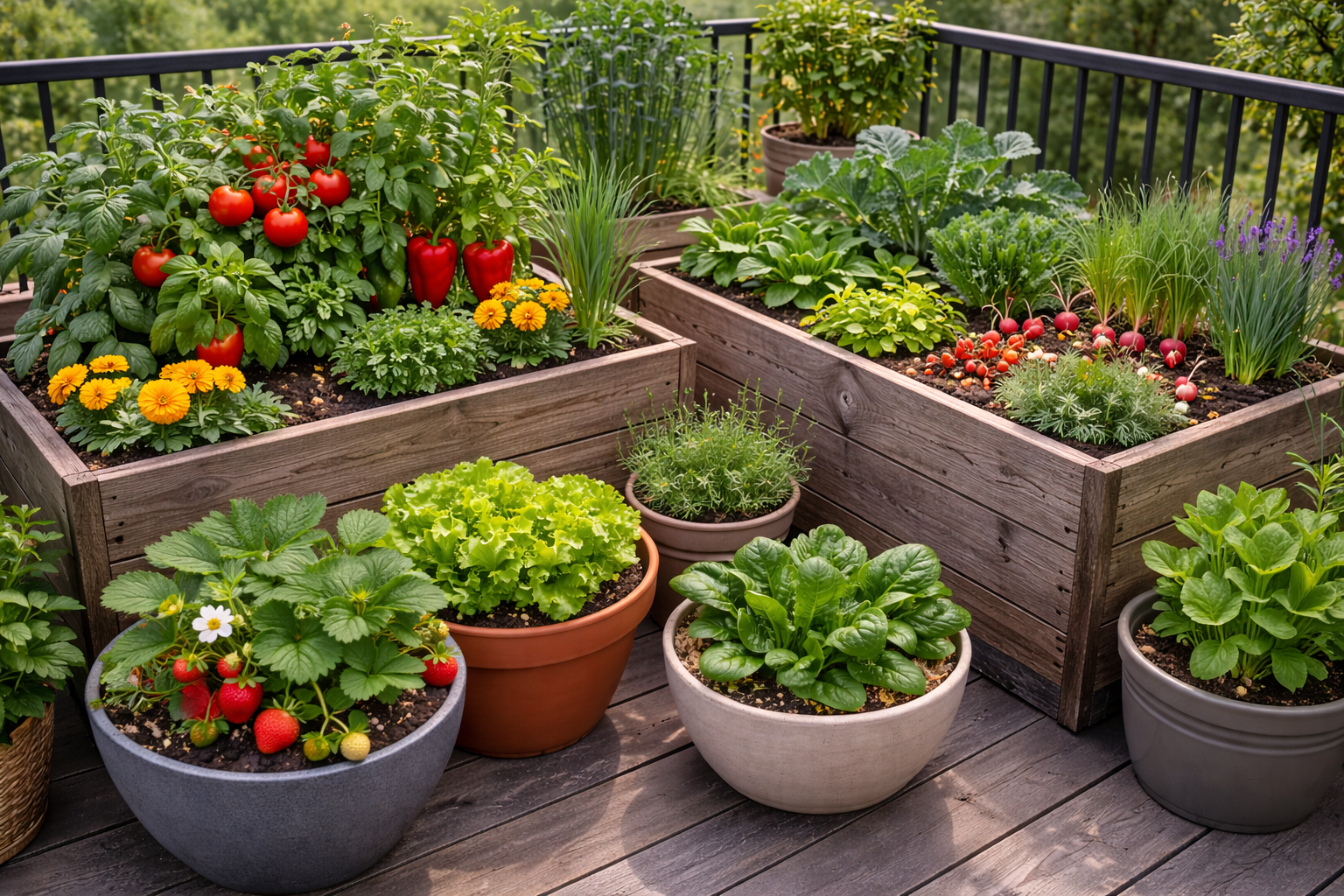
When you take up gardening it doesn’t take long to realize—some plants just grow better together.
In small-space gardens—whether you’re working with containers, raised beds, on a balcony, a porch or a deck—pairing the right plants can improve growth, reduce pests, and help you get more out of every inch.
👉🏻 And you don’t need a complicated chart (but if you want one, take a look at my (companion planting chart)
But here’s the part a lot of people overlook: Companion planting works best when it starts with good soil—because like any plant, results depend on what you’re growing in. Healthy, nutrient-rich soil and quality compost are the foundation of everything.
(👉 Check out my guides on how to make container soil that works and composting in small spaces to get this dialed in.)
Companion planting in small spaces is simply about choosing plants that help each other grow instead of competing with each other. A few simple combinations can make a big difference—just a few solid pairings are really all it takes.
Let’s take a look.
🥕 Vegetables That Grow Well Together
These are easy, proven pairings that work especially well in containers and small beds:
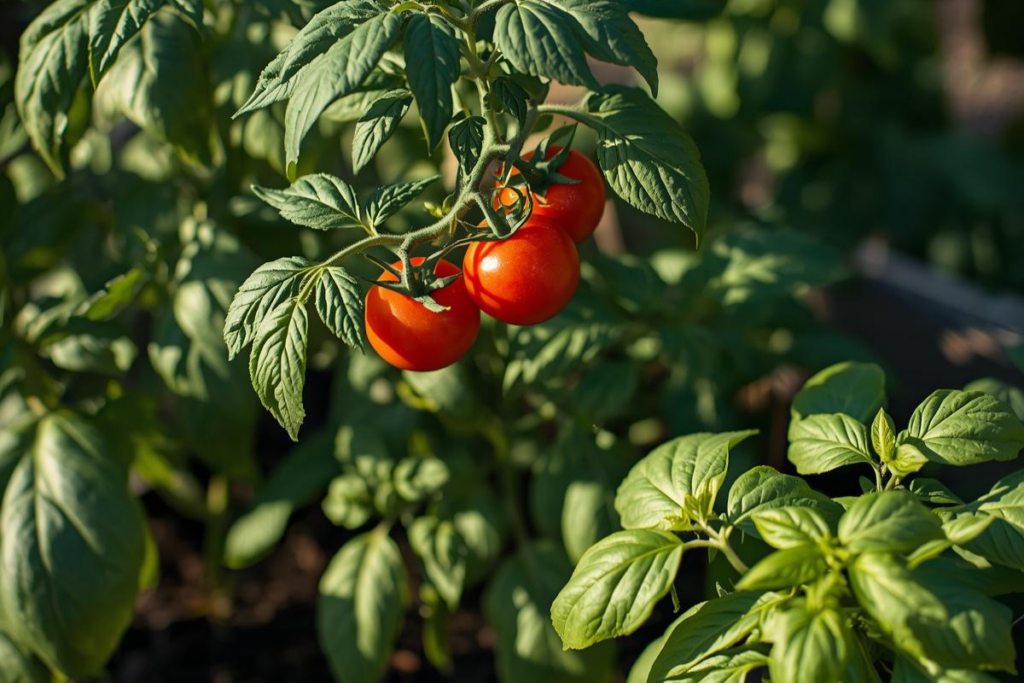
🍅 Tomatoes + Basil
Tomatoes and basil have been grown and used together for centuries—long before companion planting was a trend. Basil is a great companion for Tomatoes, because:
- Basil is known to help repel certain pests (like aphids or whiteflies)
- Can attract pollinators, and it doesn’t compete much for space, which is ideal for container companion planting.
👉 That indirectly helps tomatoes stay healthier and more productive.
🥕 Carrots + Onions (and Root Crop Alternatives)
Carrots and onions are a classic companion pairing. Onions help deter carrot flies, while carrots don’t compete heavily for space above ground.
👉 It’s a simple, effective combo for containers and raised beds.
🌱 You can also substitute or mix in other root crops:
- Turnips → grow quickly and fit well in tight spaces
- Radishes → fast-growing and great for filling gaps
- Beets → slightly larger, but still container-friendly
- Green onions (scallions) → a space-saving alternative to bulb onions
👉 These crops share similar growing needs and can be mixed depending on your space and harvest goals.
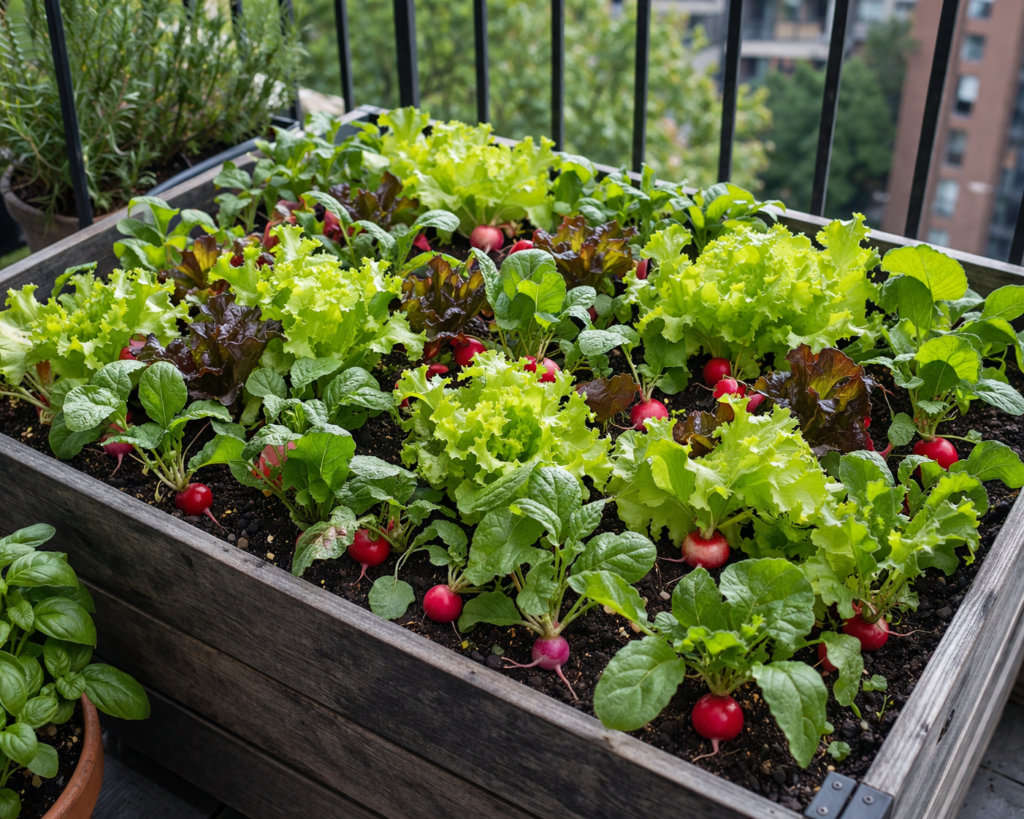
🥬 Lettuce + Radishes
👉 Radishes grow fast and help loosen the soil, while lettuce spreads out and fills in the space around them.
👉 Because radishes mature quickly, you can harvest them early—giving lettuce more room just as it starts to take off.
💡 Why this works in small spaces:
These two don’t compete much for light or root space, making them perfect for containers and raised beds where every inch counts.
🌱 Bonus tip:
Sow radishes in between lettuce rows—they act as a natural “marker crop” and help you track spacing while maximizing your harvest.
🍓 Fruits & Vegetables That Pair Well
Small-space gardening is all about layering and efficiency—these combos do both:
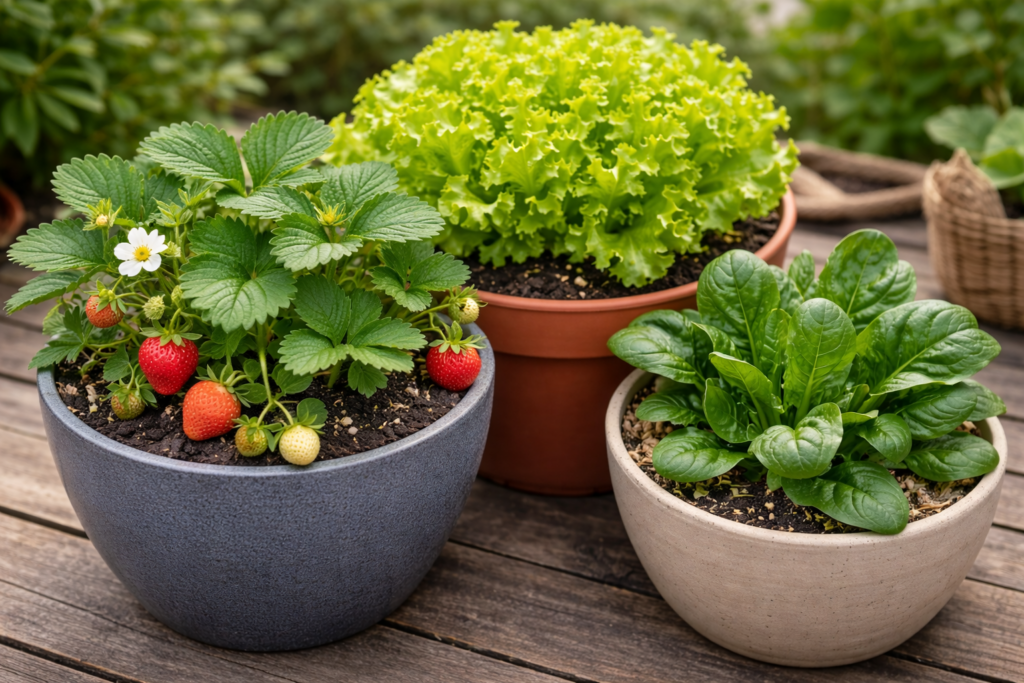
🍓 Strawberries + Lettuce
👉 Lettuce acts as a living mulch, helping retain moisture around strawberries. It may also help deter certain pests, and with different root depths, both plants make better use of the soil.
🍓 Strawberries + Spinach
👉 Both stay low and share space without crowding. Spinach works much like lettuce—helping retain moisture, reduce competition, and make better use of space around strawberries.
🍇 Raspberries + Garlic
👉 Garlic may help deter pests that target fruiting plants.
👉 Raspberries can take up a fair amount of space, but garlic fits easily around the base or along the edges without competing.
💡 Small-space tip:
Use containers, trellises, or controlled beds to keep raspberries in check while tucking garlic into unused space.
🌱 Easy Add-Ons for Almost Any Pairing
👉 Many vegetable and vegetable/fruit combinations can be improved by adding a few simple companions.
Garlic and radishes. Think of them as “plug-in plants”—they don’t take much room but add real benefits to almost any setup.
- Garlic → helps deter pests and fits easily along edges or corners
- Radishes → fast growers that fill gaps and loosen soil
👉 These can be tucked into open spaces without disrupting your main crops.
💡 Think “vertical + ground cover” or “deep roots + shallow roots.”
🌿 Herbs as Companion Plants
Herbs are some of the easiest and most powerful companions you can add—and in my experience, they make a noticeable difference. I almost always plant herbs alongside my vegetables, and pest issues have been minimal.
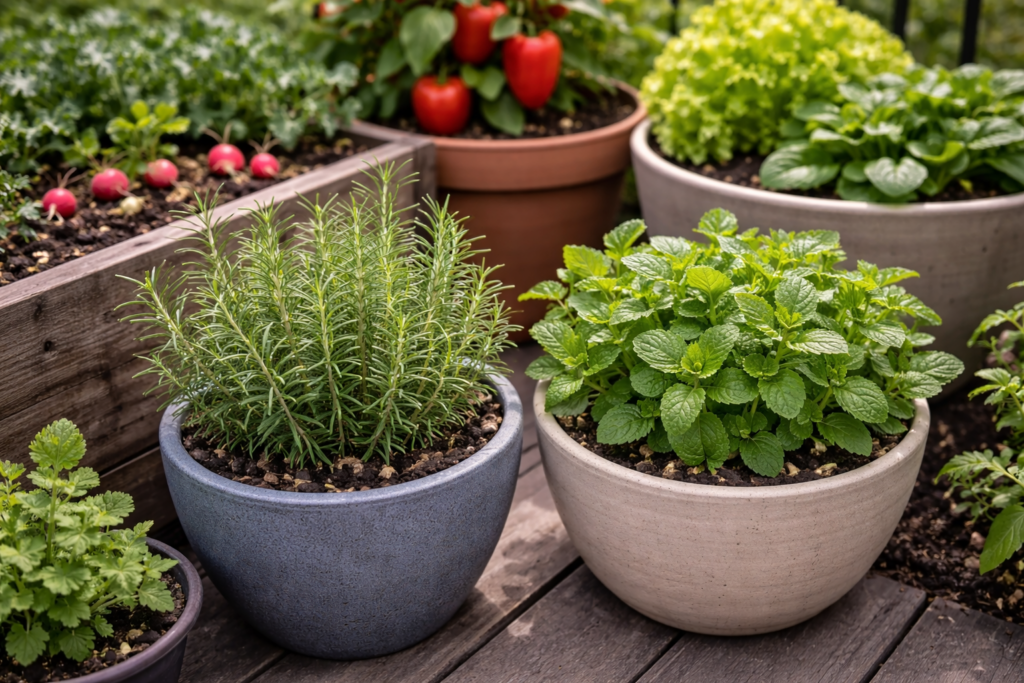
🌿 Basil
👉 Great near tomatoes—may help with pest control and overall growth.
👉 Easy to tuck into containers or corners without taking up much space.
🌿 Rosemary
👉 Its strong scent can help deter insects in small garden spaces.
👉 Does best in drier soil, so place it where it won’t get overwatered.
🌿 Mint
👉 Can help repel pests—but plant it in its own container (it spreads aggressively).
👉 Works well placed nearby rather than directly in the same pot.
🌿 Cilantro
👉 May help attract beneficial insects while deterring some pests.
👉 Grows quickly and fits well between slower-growing plants.
🌿 Parsley
👉 Can attract beneficial insects and works well as a filler plant.
👉 Tolerates partial shade, making it great for tighter or mixed plantings.
💡 Small-space tip:
Herbs don’t need much room, so you can tuck them along edges, between plants, or in separate small containers right next to your main crops.
👉 In small spaces, herbs pull double duty—flavor + function.
🌸 Flowers & Other Helpers
Adding flowers isn’t just for looks—they actively support your garden by deterring pests, attracting beneficial insects, and improving the overall growing environment.
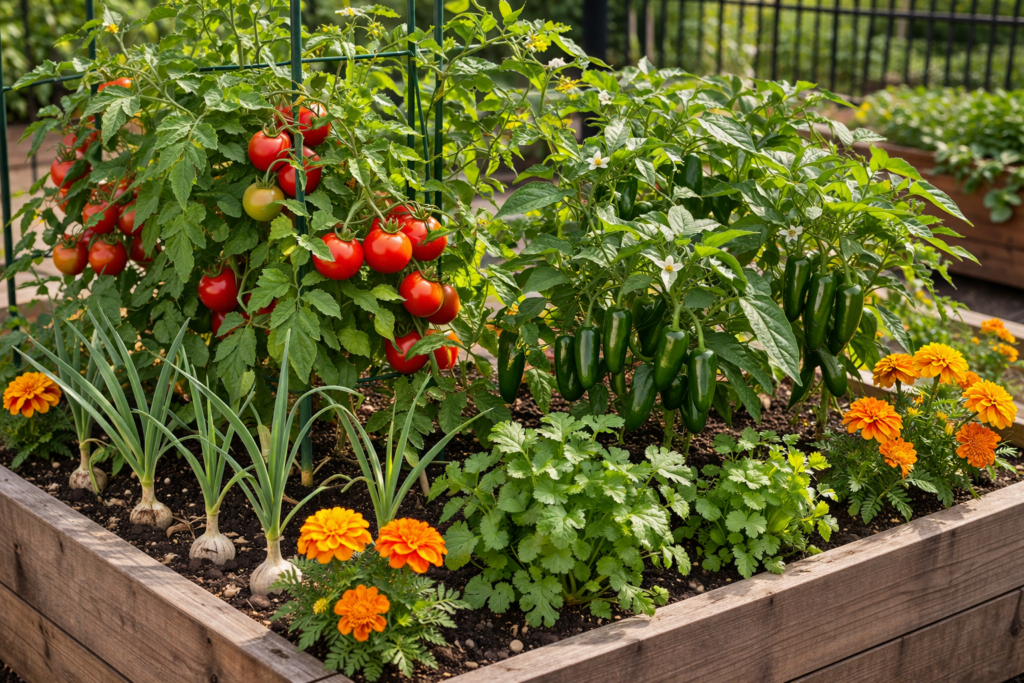
🌼 Marigolds
👉 Help deter pests in the soil and around plant roots.
👉 Perfect for edging containers or raised beds, and easy to tuck in without taking up valuable space.
🌺 Nasturtiums
👉 Act as a “trap crop,” attracting pests away from your vegetables. Keep them close—but not crowded—so they can draw pests away effectively.
👉 Also great for filling space and even edible if you want a bonus use. Let them spill over the sides of containers or raised beds to maximize space.
🌻 Sunflowers
👉 Provide light shade and can act as natural supports for climbing plants.
👉 Best grown in their own container or at the back of a raised bed due to their size. Use dwarf varieties for small spaces and containers to avoid shading out other plants.
Companion planting is just one way to reduce pests naturally. This quick video from My Family Garden shows how small-space gardens can stay healthy and productive with simple pest control strategies:
🎥 Learn More About Pest Control in Small Gardens
💡 Tip:
You don’t need many—just one or two well-placed flowers can make a noticeable difference.
⚠️ What NOT to Plant Together
You don’t need a long list—just avoid a few known problem pairings:
- ❌ Tomatoes + Potatoes
👉 Compete heavily and can spread disease - ❌ Onions + Beans
👉 Onions can stunt bean growth - 🥕 Carrots + Dill
👉 Dill can interfere with carrot growth as it matures. - 🥬 Lettuce + Parsley
👉 Parsley can compete for space and slow lettuce growth.
👉 If plants compete for the same nutrients or attract the same problems, keep them apart.
📊 Simple Companion Planting Rule (Keep It Easy)
You don’t need to memorize charts. Companion planting in small spaces is all about choosing a few combinations that work instead of trying everything.”
👉 Just focus on mixing plants that:
- Help with pest control
- Improve pollination
- Use space differently (tall vs low, deep vs shallow roots)
💡 That alone will get you 80% of the benefit.
Keeping things simple is the name of the game! This quick video from Growing in the Garden breaks it down really well:
“Companion Planting: 3 Tips to Make It Easy“
🔗 Build a Better Small-Space Garden
👉 Want to take this further?
- Learn how to build better soil → [How to Make Container Soil That Works]
- Keep everything thriving → [Keeping Plants Healthy Through the Growing Season]
- Plan your next round → [Succession Planting Guide]
👉 And if you want a quick reference, check out the companion planting chart in the succession planting guide.
🧠 WRAP-UP
Companion planting doesn’t have to be complicated.
In small spaces, it’s really about:
👉 choosing plants that work together instead of competing! Keep good companions together—and give problem pairings their own space.
Start with a few simple pairings, experiment a little, and you’ll quickly see what works best in your space.
💡 Small-space tip:
In containers and raised beds, space is limited—so avoiding poor pairings matters just as much as choosing good ones.