
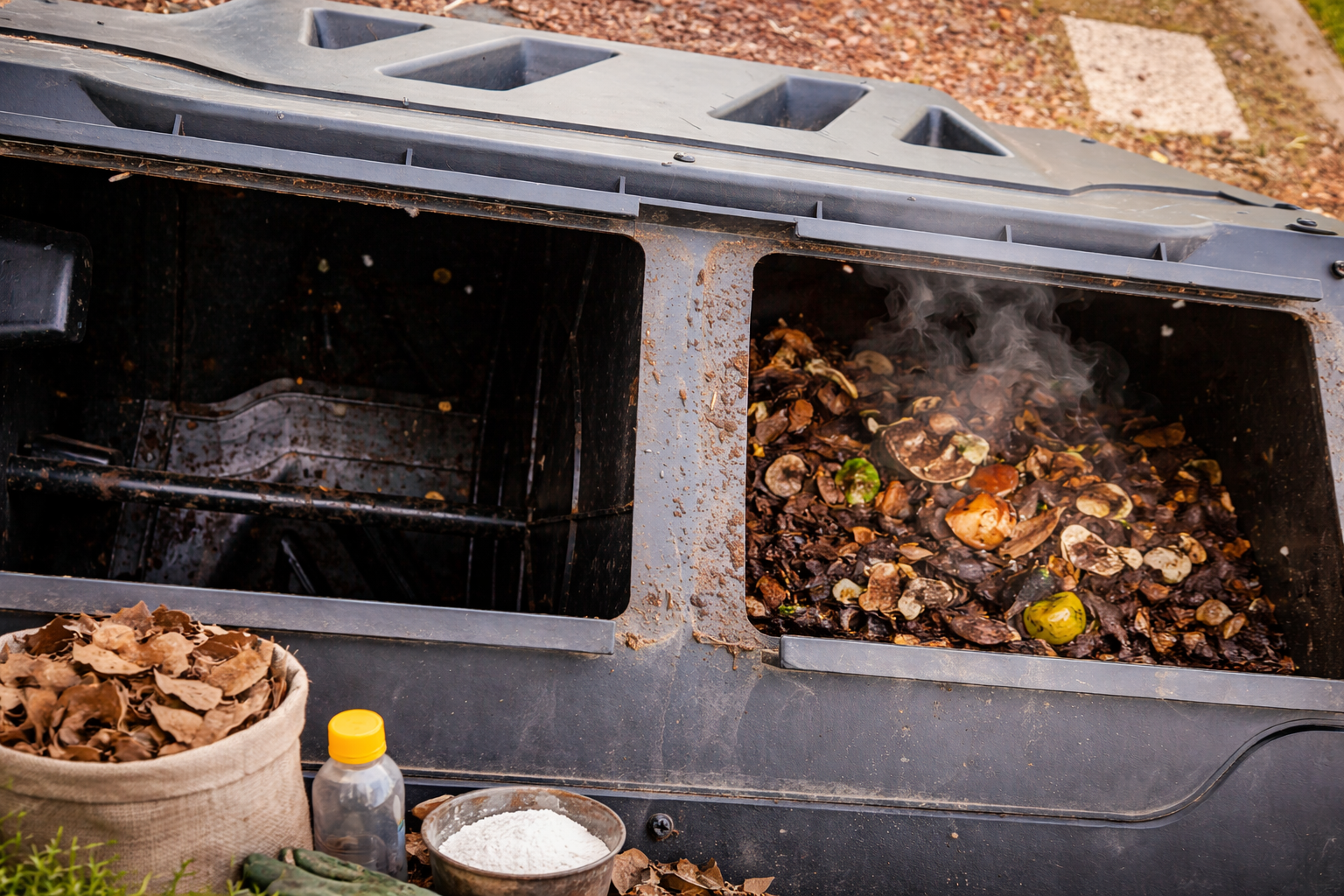
Left Your Compost Sitting Too Long? You’re Not Alone
Left your compost bin sitting too long? Smelly, soggy, dried out, or full of flies?
It happens.
Life gets busy, and before you know it, that compost bin you started with good intentions turns into something you’d rather not open.
The good news? Most neglected compost isn’t ruined — it just needs rebalancing.
I ran into this myself with a rotary bin that had been sitting way too long. One side was overfilled, compacted, and buzzing with fruit flies… the other side empty. Not ideal — but totally fixable.
If you’re working with limited room, especially on a balcony or patio, check out my guide on composting in small spaces.
🔍 What You’re Starting With (Quick Diagnosis)
Before fixing anything, you need to take a look inside and figure out what you’ve got.
Common situations:
- Too Wet / Slimy / Smelly
- Clumped together
- Rotten smell
- Little airflow
- Too Dry / Stalled
- Dusty or hard
- No heat
- Not breaking down
- Mixed / Compacted (most common)
- Some wet, some dry
- Packed tight (especially in tumblers)
- Bugs or flies hanging around
👉 Don’t overthink it — identify and correct the main issue first.
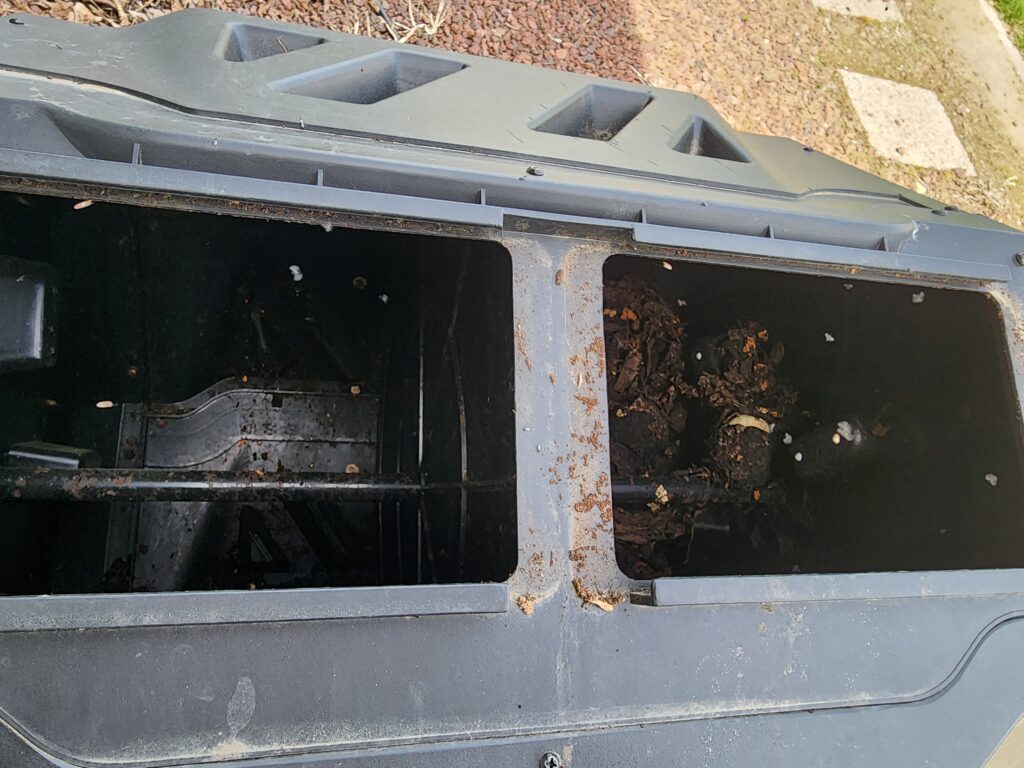
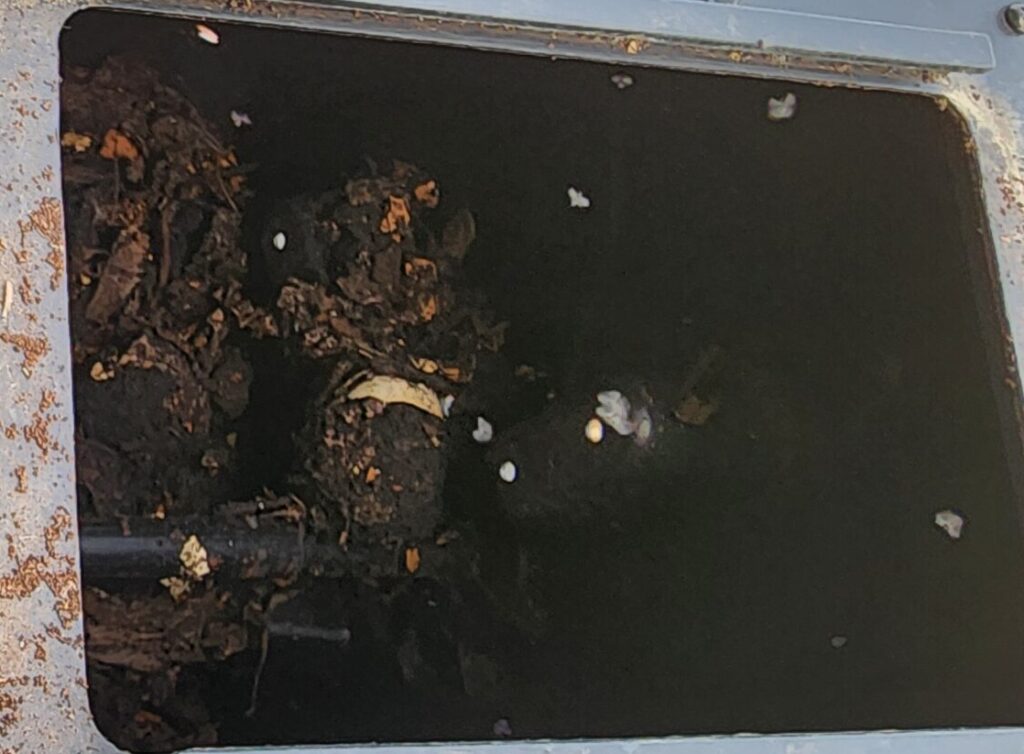
Before Revival: A neglected compost bin with compacted, clumpy material and slow decomposition. Recoverable—but overdue for attention.
⚖️ Step 1: Rebalance the Mix
This is the biggest fix.
Compost only works when greens (nitrogen) and browns (carbon) are balanced. If they’re out of balance, the compost pile won’t do much—it’ll stall, smell, or take forever to break down. Getting this balance right doesn’t just fix your compost — it directly affects how healthy your soil will be later.
💧 If your compost is too wet:
When a compost pile gets too wet, it loses airflow and starts to break down without enough oxygen. This leads to a soggy, compacted mess that can smell sour or rotten instead of earthy. Decomposition slows way down, and beneficial microbes struggle to do their job.
Add Browns:
- Dry leaves
- Shredded cardboard
- Paper (non-glossy)
👉 Browns absorb moisture and reduce smell.
🥵 If your compost is too dry:
When a compost pile gets too dry, the microbes that are breaking everything down slow way down or even stop altogether. Instead of turning into rich compost, the material just sits there looking unchanged. You might notice it feels light, crumbly, and inactive rather than warm and earthy.
Add Moisture:
- A little water (not soaked)
- Fresh greens (food scraps, coffee grounds)
👉 You want it like a wrung-out sponge — not dripping, not arid.
🔄 Step 2: Turn and Break It Up
Neglected compost usually becomes compacted — especially in rotary bins.
When a compost pile gets too dry, everything starts to slow down and tighten up. The material becomes dense and compacted, and without enough moisture, the microbes that drive decomposition either go dormant or die off. Instead of breaking down, the pile just sits there, getting drier and more stubborn as time goes on. In a rotary composter, this can even make it hard to turn, especially that first turn, because the contents clump together, getting denser instead of staying loose. Adding water along with some fresh greens helps loosen things back up and reactivate microbial life. This will get the compost moving a again.
What to do:
- Break up clumps
- Mix wet and dry areas together
- Spin or turn the bin thoroughly, both directions
👉 Air is critical. Without it, compost goes anaerobic (the bad smell).
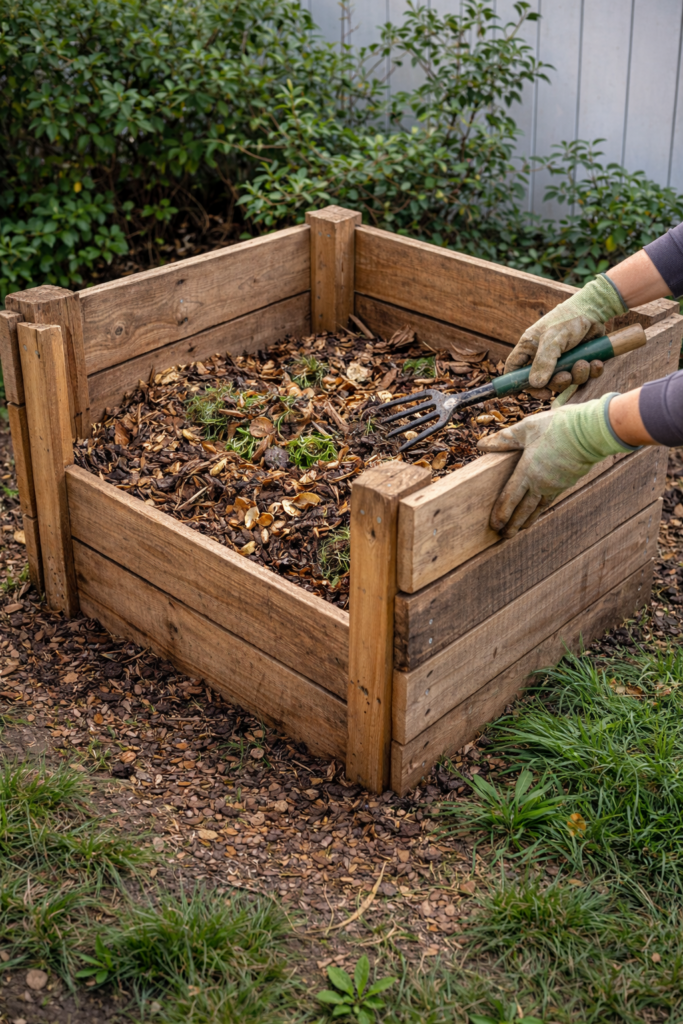
Want to see what this looks like in real life? This quick video shows how turning and breaking up compost helps bring it back to life.
🦨 Step 3: Deal With Flies and Odor
Fruit flies and smells are common in neglected bins—and they’re usually a sign that something’s out of balance. The good news is this problem is common and easy to fix. With correct moisture, airflow, and mix of greens and browns the pest problem goes away.
If flies or other pests do keep showing up around your bin, check out my guide to Natural Pest Control in Small Spaces for simple, chemical-free solutions.
Quick fixes:
- Always cover fresh scraps with browns
- Keep the lid closed
- Add a dry top layer (leaves/cardboard)
👉 Once the mix is balanced, flies disappear fast.
⏳ Step 4: Let It Restart
After rebalancing and turning, give your compost a little time to come back to life.
Check it in a couple of days, give it another turn, and make small adjustments as needed—add a bit more browns, greens, or moisture depending on how it looks and feels.
Watch for signs it’s working again:
- Warmer temperature
- Earthy, natural smell
- Materials starting to break down
👉 When you see these, your compost is active again and back on track. This means your compost is active again.
🌿 What to Expect After Fixing It
Once it’s ready, you can start mixing it into your containers — here’s how to use it with container soil that actually works.
- Smell: Earthy instead of sour or rotten
- Moisture: Slightly damp — not dripping or bone dry
- Texture: Looser, not clumped or compacted
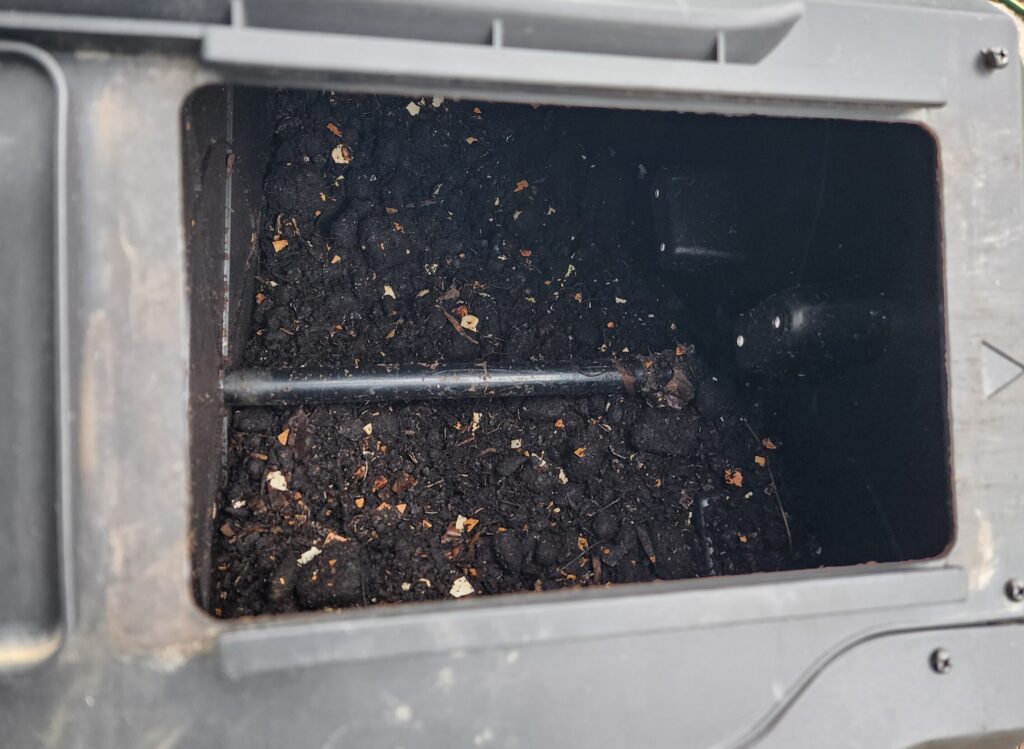
Over the next several days, you should start to notice small changes:
- Materials beginning to break down and lose their original shape. This is the stage where your compost becomes usable — and knowing when to use it can make a big difference in your results, especially when growing in small spaces.
- Less odor and fewer flies
- A slight warmth inside the pile (a sign it’s active again)
Give it time — compost doesn’t fix overnight, but once it restarts, it builds momentum.
If it stalls again, like mine, just repeat the same steps. Composting is forgiving.
👉 “You will notice a difference in the smell at the beginning — that’s usually the first sign things are heading in the right direction.”
💡 Pro Tip (From Experience)
Compost piles and bins can fill up and compact faster than you think if you keep adding without checking on them.
Rotary bins make this mistake a little easier to catch — but they can still get out of balance if one side gets overloaded.
If one side gets too full:
- Stop adding to it and switch to the other side
- Take a little time to loosen it up and rebalance it
👉 It’s a lot easier to fix it early than wrestle with a packed, neglected bin later.