
“It’s not the plant — it’s the soil.”
If your plants are struggling in containers, the problem usually isn’t what you’re growing—it’s your container soil mix. Cheap bagged soil often looks fine at first, but it breaks down quickly, drains poorly, and leaves your plants struggling to survive.
The good news? You don’t need expensive soil to fix it. You just need to understand what your soil is missing—and how to correct it.
🌿 Why Cheap Soil Fails in Containers
As any experienced container gardener will tell you, most inexpensive potting soils have a few common problems in varying degrees:
- They compact over time
- They hold too much water or they dry out too fast
- They lack nutrients
- They don’t give roots enough space to grow
If plants still struggle after feeding, start with the basics and read Before You Fertilize: Fix Your Soil First.
👉 In containers, there’s no natural system to balance things out. What you put in is what your plants get. You’re the one keeping that soil healthy and balanced.
🧱 The 3 Things Every Good Soil Mix Needs
Good container soil is all about balance—and that balance is exactly why the better mixes cost more.
💧 Holds Moisture
Your soil needs to be able to retain enough water so plants don’t dry out quickly, especially during hot weather. If summer heat is constantly drying your pots, check out my guide on Summer Watering Hacks for Container Gardens.
🌬️ Drains Excess Water
Too much water is another issue. This condition will lead to root problems fast. Excess moisture needs to move through the soil easily.
🌱 Provides Structure
Roots need space to grow, expand, and breathe. In nature, it’s not just dirt—soil is filled with rocks, stones, and pebbles. That natural structure is exactly what we’re trying to recreate in our soil mix.
👉 If your soil doesn’t do all three, your plants will struggle.
🪴 How to Fix Cheap Soil (Simple Mix That Works)
You don’t need to throw away cheap soil—you just need to improve it. Here’s the simple method I’ve used for years to get consistently good results.
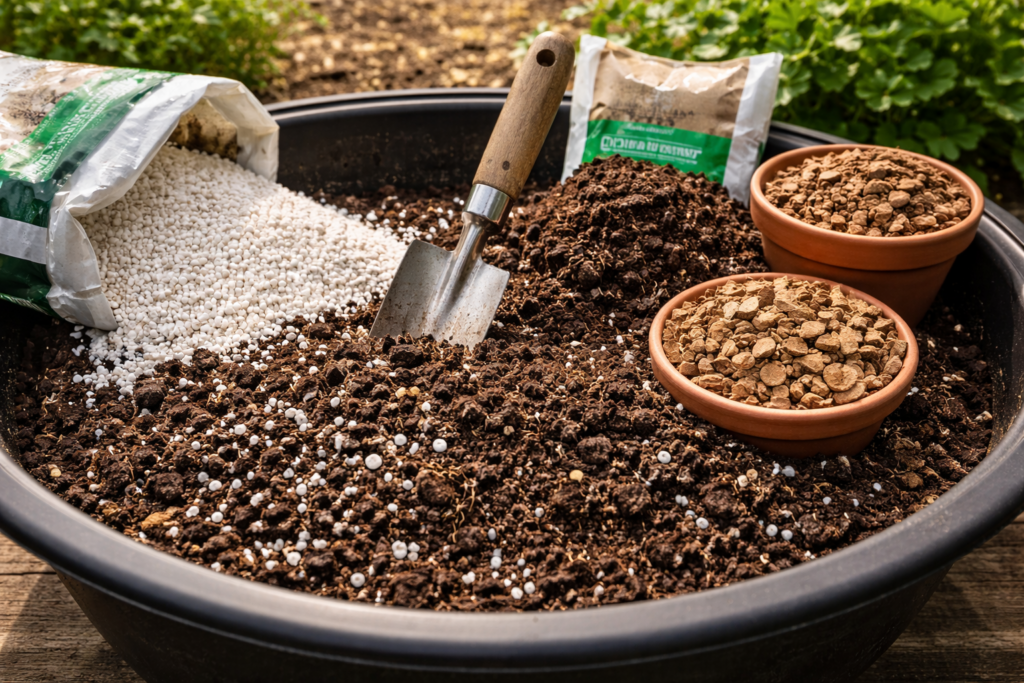
👉 Basic Mix:
- 2 parts cheap potting soil
- 1 part compost
- ½ part perlite or vermiculite
💡 Why This Works
- Compost adds nutrients and improves structure
- Perlite improves drainage and airflow
- Cheap soil acts as your base
👉 Together, this creates a balanced mix that performs like (or better than) the expensive store-bought soil.
Watch this video from The Millennial Gardener for a quick breakdown.
⚠️ Common Mistakes to Avoid
- Using straight bagged soil without adding amendments
- Using garden soil in containers. This soil compacts easily, it’s made for in-ground use, not containers.
- Skipping drainage materials
- Letting soil fully compact before fixing it
👉 Most problems start here.
🔄 How to Keep Your Soil Working
Good soil isn’t a one-time thing. You need to maintain your soil.
- Add compost between plantings
- Loosen the soil if it starts compacting
- Reuse and refresh instead of replacing
👉 A little soil maintenance goes a long way.
✅ Quick Summary
- Cheap soil alone isn’t enough for containers
- Good soil needs moisture, drainage, and structure
- Add compost and perlite to improve performance
- Refresh your soil instead of throwing it away
❓ FAQ Section
Yes, but it needs to be improved with compost and drainage materials to work well.
A mix of potting soil, compost, and perlite provides a good balance of nutrients, drainage, and structure.
You don’t need to replace it—just refresh it with compost and loosen it between plantings.