
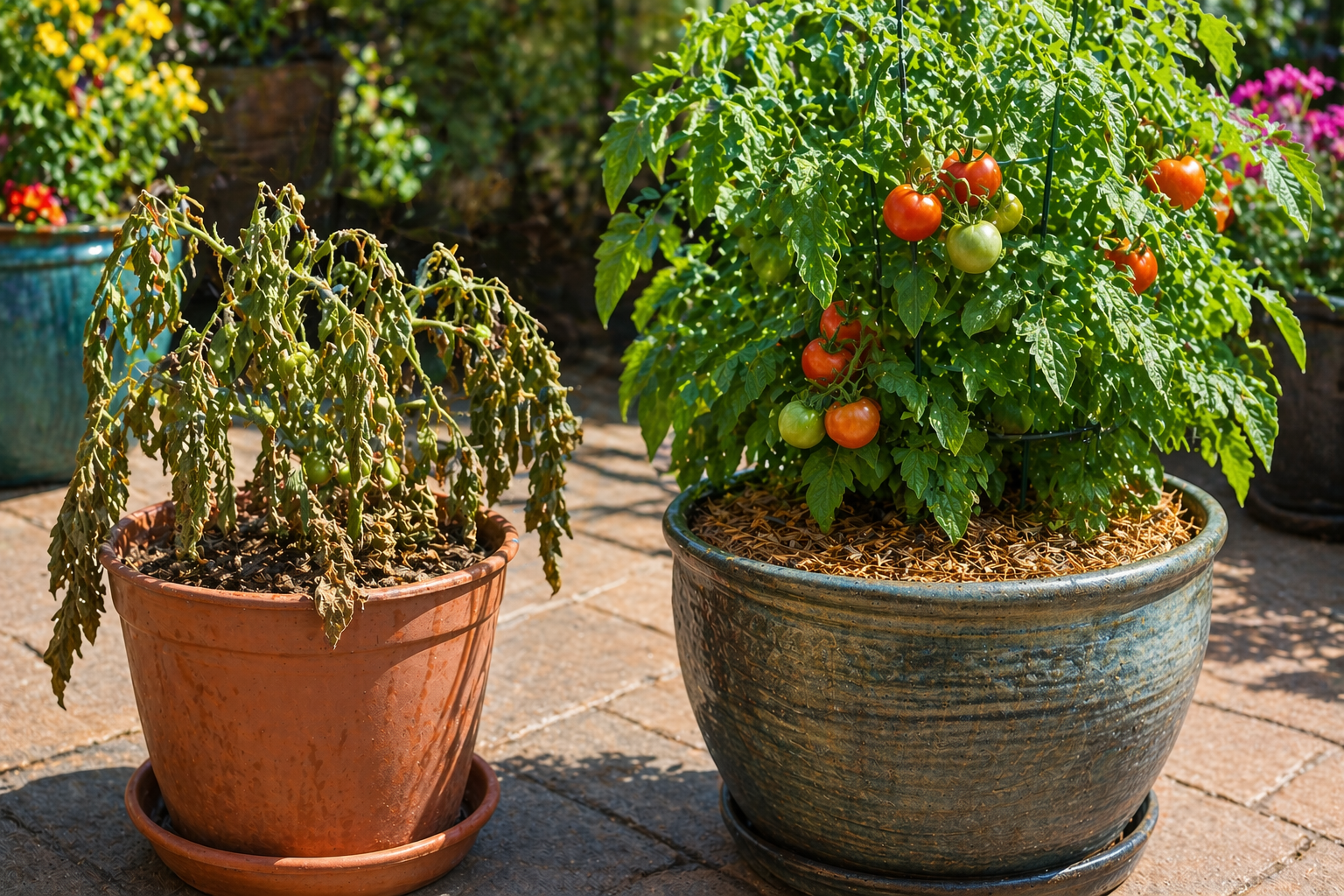
When summer settles in and the heat is turned up, gardens can dry out shockingly fast. Container plants are especially vulnerable because pots are exposed, there is no natural surrounding soil to absorb and distribute the heat, meaning pots will heat-up much quicker than in-ground soil. Plus, roots have much less space to search for moisture so one missed watering can lead to wilted, stressed plants.
Even small backyard garden plots can struggle during hot weather, especially in raised rows and beds, fresh soil, or exposed sunny areas.
There is good news though!
A few smart summer watering hacks can make your summer gardening much easier—and help you water smarter instead of simply watering more.
🌡️ Why Containers Dry Out So Fast in Summer
Containers lose moisture faster than garden beds for several reasons.
In pots, the smaller soil volume holds less water, so moisture is used up and evaporates more quickly. This is made worse by wind exposure and by the pot itself heating up fast in direct sun. Hanging baskets dry out even faster because air circulates around all sides.
Fresh transplants need extra care in heat, so don’t move indoor starts straight into full sun on day one. Give them a few days to gradually adjust by placing them outside in morning light or partial shade first, then increase sun exposure each day. This simple hardening-off process helps prevent shock, wilting, and sun scorch. For the full step-by-step method, see How to Transplant Without Shock (7 Simple Steps That Work).
Natural ground soil stays cooler because heat can disperse downward and outward through the earth. Pots, on the other hand, trap heat around the root zone with far less insulation. Dark-colored containers absorb significantly more heat than light-colored ones, which can make the problem even worse.
👉 In containers, roots depend entirely on you.
⏰ Water at the Right Time
Timing matters just as much as volume when watering containers in summer.
The best time to water is early morning: If you can water before the sun is fully up, even better. Plants can take up moisture before the day heats up, and less water is lost to evaporation.
The second-best time is evening: If you miss the morning window or your schedule makes it difficult, wait until later in the day when temperatures begin to cool.
Avoid watering from mid-morning until late afternoon whenever possible: During the hottest part of the day, much of the water can evaporate before it reaches the roots. Also, cold water can create a sudden temperature swing that may temporarily shock roots and wilt sensitive plants.
If a plant is clearly wilting or in distress, water it right away! Saving the plant matters more than perfect timing (always water at the roots). But for routine watering, early morning or evening is the smart move.
👉 Consistent timing helps plants stay steadier through summer heat.
💧 Slow Deep Watering Beats Frequent Light Sprinkles
However you choose to grow—whether in containers, raised beds, or in-ground gardens—water deeply whenever possible. Giving plants small drinks throughout the day can encourage shallow roots that stay near the surface where soil dries out fastest.
Instead, soak the soil thoroughly when you water so moisture reaches deeper into the root zone.
Why it works:
Deep watering encourages roots to grow downward in search of moisture. That creates stronger plants with better drought tolerance and a more stable root system. Deeper roots are also better equipped to handle surface heat and evaporation loss.
👉 Fewer deep waterings often outperform daily light splashes.
🚿 Basic Drip System Options for Beginners
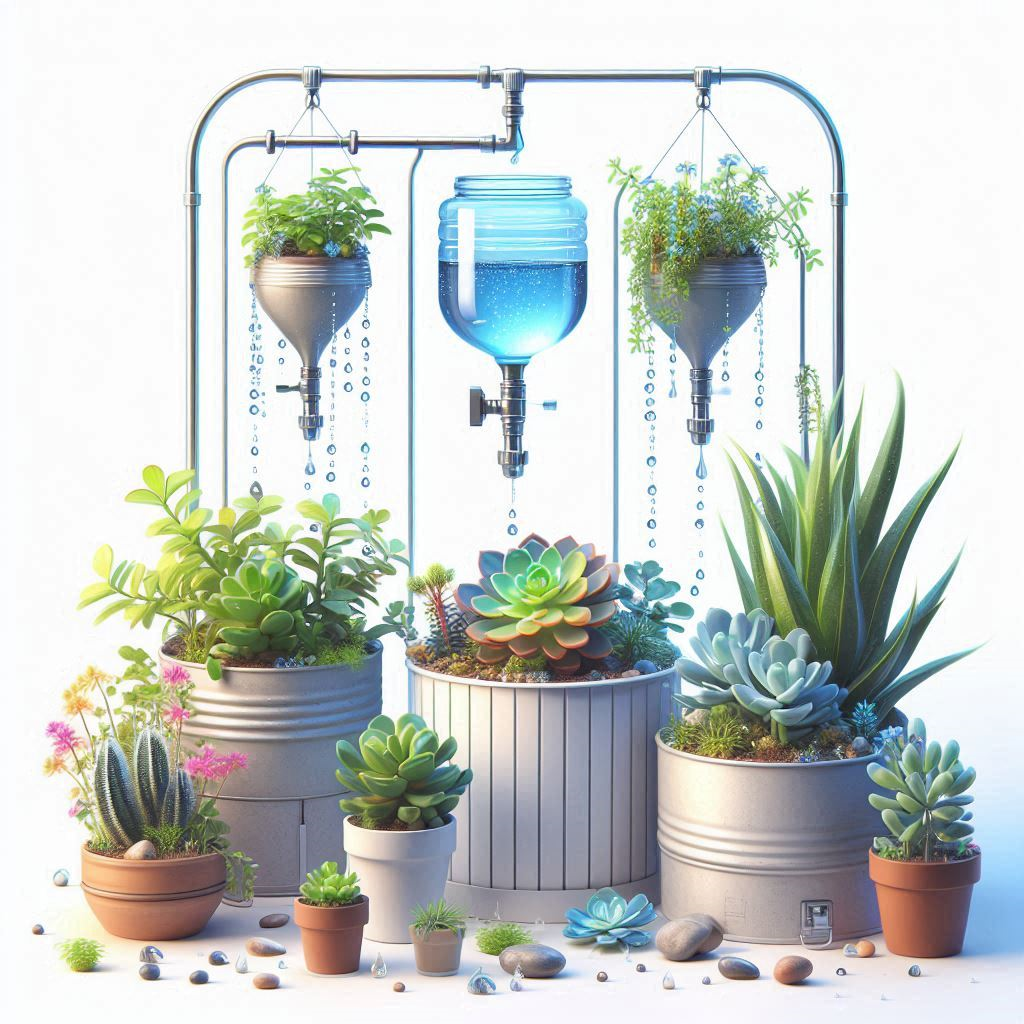
If you miss watering days or want more consistent moisture, drip systems are one of the smartest summer upgrades you can make. Once set up, they deliver slow targeted watering right where roots need it most.
A simple drip system connected to a hose timer can take the worry out of watering, especially during hot spells. While most systems take a few minutes to assemble and adjust the first time, the payoff is well worth the effort.
Popular beginner-friendly options include soaker hoses for grouped pots or garden rows, gravity-fed bucket drip kits that work without household pressure, hose timers paired with drip emitters, and solar-powered drip kits for patios or remote areas.
👉 Drip Systems are perfect for vacations, busy schedules and heat waves.
🥛 DIY Milk Jug Drip Watering Hack
One of the simplest and lowest-cost summer watering tricks is using plastic jugs as slow-release reservoirs.
Use a plastic jug with a few small holes near the bottom and partially bury it. That makes refilling quick and easy while allowing water to seep slowly into the root zone.
Every fourth or fifth refill, I like to use a diluted Miracle-Gro Plant Food solution instead of plain water to give plants a light feeding.
For raised beds or planter boxes, smaller quart containers work well, I use 2 or 3. Instead of burying them, simply set them on the soil surface near the plants, or bury up to where the holes are just covered, and let them release moisture gradually.
👉 It’s inexpensive, easy to maintain, and helps water reach roots where it matters most. But you still need to remember to refill.
How It Works:
Use a clean plastic jug and poke 1 to 3 tiny holes at the bottom. Fill the jugs with water and place them or partially bury them next to your plants.
Partially buried jugs often release water more evenly because the surrounding soil draws from the jug depending on how wet it is which helps regulate the flow. Water slowly releases over several hours.
This method of watering is great for Tomatoes, Peppers and vining crops like Cucumbers, Squash and Pumpkins.
👉 Excellent for containers or thirsty backyard plants.
🌿 Mulch = Hidden Water Saver
Mulch may be the best summer watering hack of all. Any kind of soil cover is a major plus during hot weather. Adding mulch can dramatically reduce moisture loss from evaporation while helping keep the root zone cooler. Many mulch materials also absorb some water during watering and slowly release that moisture back as the soil beneath begins to dry.
Great Choices for Containers:
- Straw
- Bark fines
- Compost
- Coco coir
- Shredded leaves
Great Choices for Backyard Beds:
- Straw
- Dry grass clippings
- Leaves
- Compost
- Wood chips between rows
Why it works:
- Keeps soil cooler
- Slows evaporation
- Reduces watering frequency
- Protects roots
🪴 Double Pot Trick for Containers
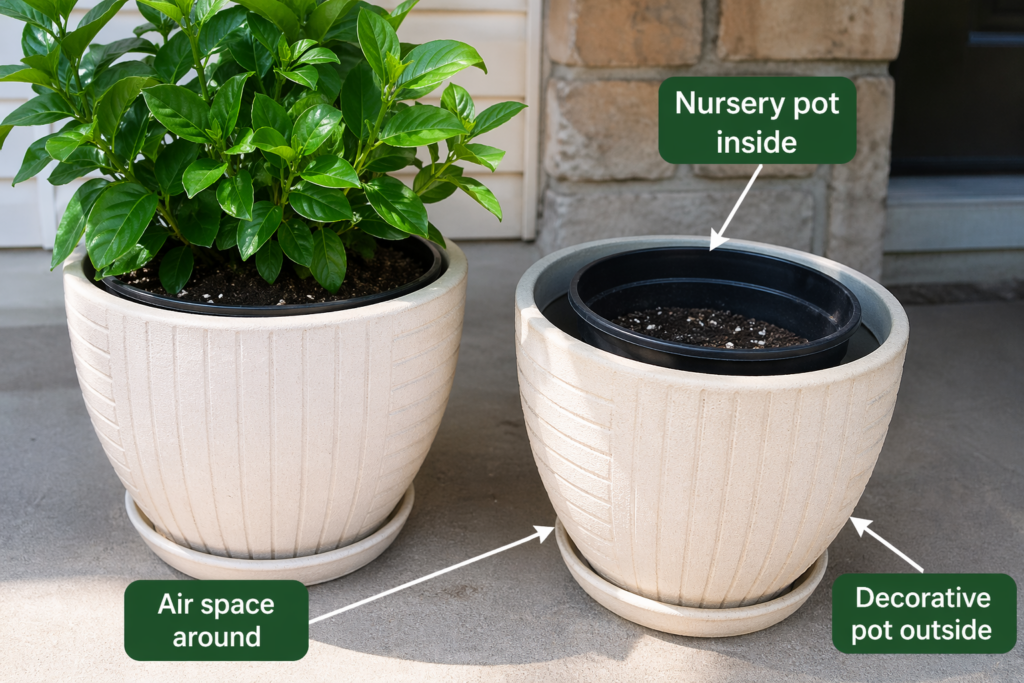
Place a nursery pot inside a larger decorative pot with air space around it.
Benefits:
- Root zone stays cooler
- Slower moisture loss
- Cleaner appearance
- Extra protection from hot sun on pot sides
🧪 Upgrade Your Potting Mix for Better Moisture Retention
Cheap mixes often dry out too fast, become hydrophobic and repel water, or break down quickly into dense material that restricts roots. Many bargain soils also lack balanced nutrients and organic matter, which can leave plants struggling even when you water regularly.
Add:
- Compost
- Coconut coir
- Worm castings
A better soil mix can reduce watering stress all summer.
👉 See my Post on How to Make Container Soil That Really Works
🌞 Group Pots Together to Create a Microclimate
Cluster containers together when possible. A group of pots can create a cooler, more protected growing zone than scattered containers sitting alone in full sun.
Benefits:
- Plants shade each other
- Less wind exposure
- Slower drying
- Easier watering routine
- Cooler root zones in nearby pots
A smart strategy is pairing taller, heat-tolerant plants next to shorter crops that struggle in intense afternoon sun. Tomatoes, peppers, sunflowers, or sturdy herbs can help cast light shade over lettuce, spinach, basil, or young seedlings during the hottest part of the day.
Small changes in placement can create noticeably cooler growing conditions and reduce stress on sensitive plants.
🌤️ Shade During Extreme Heat
Sometimes plants need extra help during brutal summer afternoons, especially when they are growing in containers. Pots heat up quickly, soil dries faster, and roots have far less protection than plants growing in the ground. During extreme weather, a little shade can make a big difference.
Use temporary shade during heat waves:
- Shade cloth
- Old bed sheets
- Light fabric panels
- Patio umbrellas
Even a few hours of afternoon relief can dramatically reduce stress, slow moisture loss, and help prevent wilting, blossom drop, or scorched leaves. Sensitive crops like lettuce, spinach, basil, and young seedlings often benefit the most.
🚨 Signs You’re Losing the Battle
When summer weather turns extreme, even diligent gardeners can struggle to keep container plants healthy. Watch for these warning signs:
- Wilting every day
- Soil pulling away from pot edges
- Blossom drop
- Crispy leaf tips
- Yellow lower leaves
- Cracked soil
- Needing water twice daily
- Stalled growth
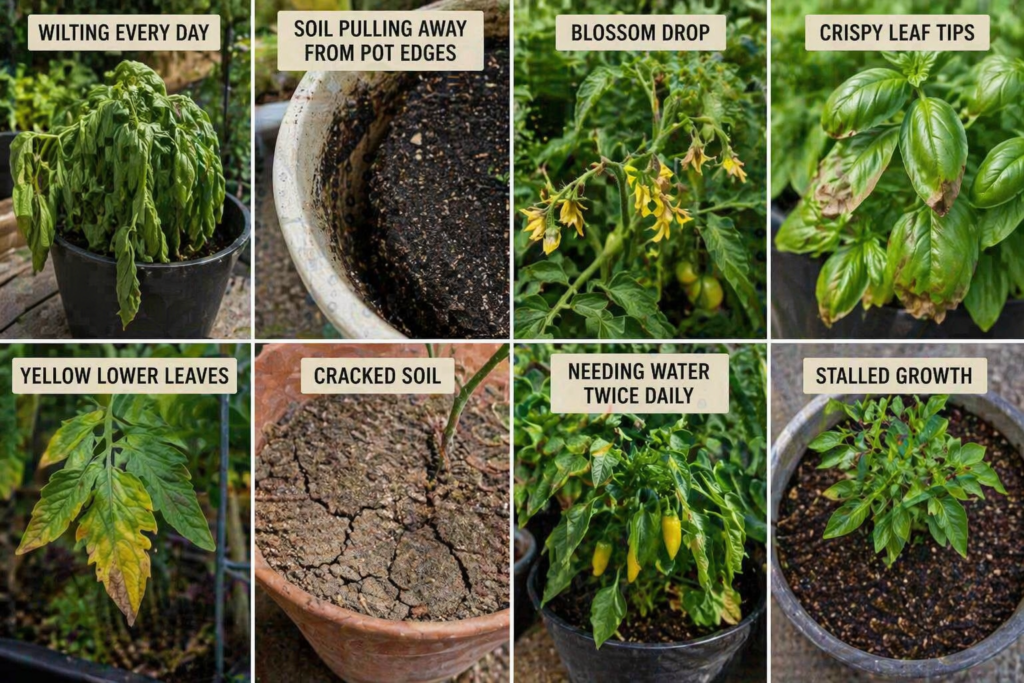
When containers dry out too fast, plants often show stress through wilting, yellowing leaves, blossom drop, and slowed growth. If you want to stay ahead of these issues, see my guides on Keeping Your Plants Healthy Through the Growing Season and Keeping Your Plants Healthy Through Summers Heat & Moody Weather Swings
Most important of all, watering is not always the only issue. Sometimes tired old potting mix needs to be rebuilt and refreshed. If plants keep struggling, start with Fix Your Soil First.
👉 These usually mean roots are overheating or drying too fast.
💰 Best Upgrades If Budget Allows
Helpful tools that reduce daily stress:
- Hose timer
- Drip kit
- Self-watering planter
- Moisture meter
- Shade cloth
(Strong future affiliate section)
Final Thought
Whether you grow in containers, raised beds, or a small backyard patch, summer success comes down to keeping roots cool, moist, and consistent.
A few simple watering hacks can turn daily stress into a manageable routine—and help your garden thrive through the hottest part of the year. 🌱