
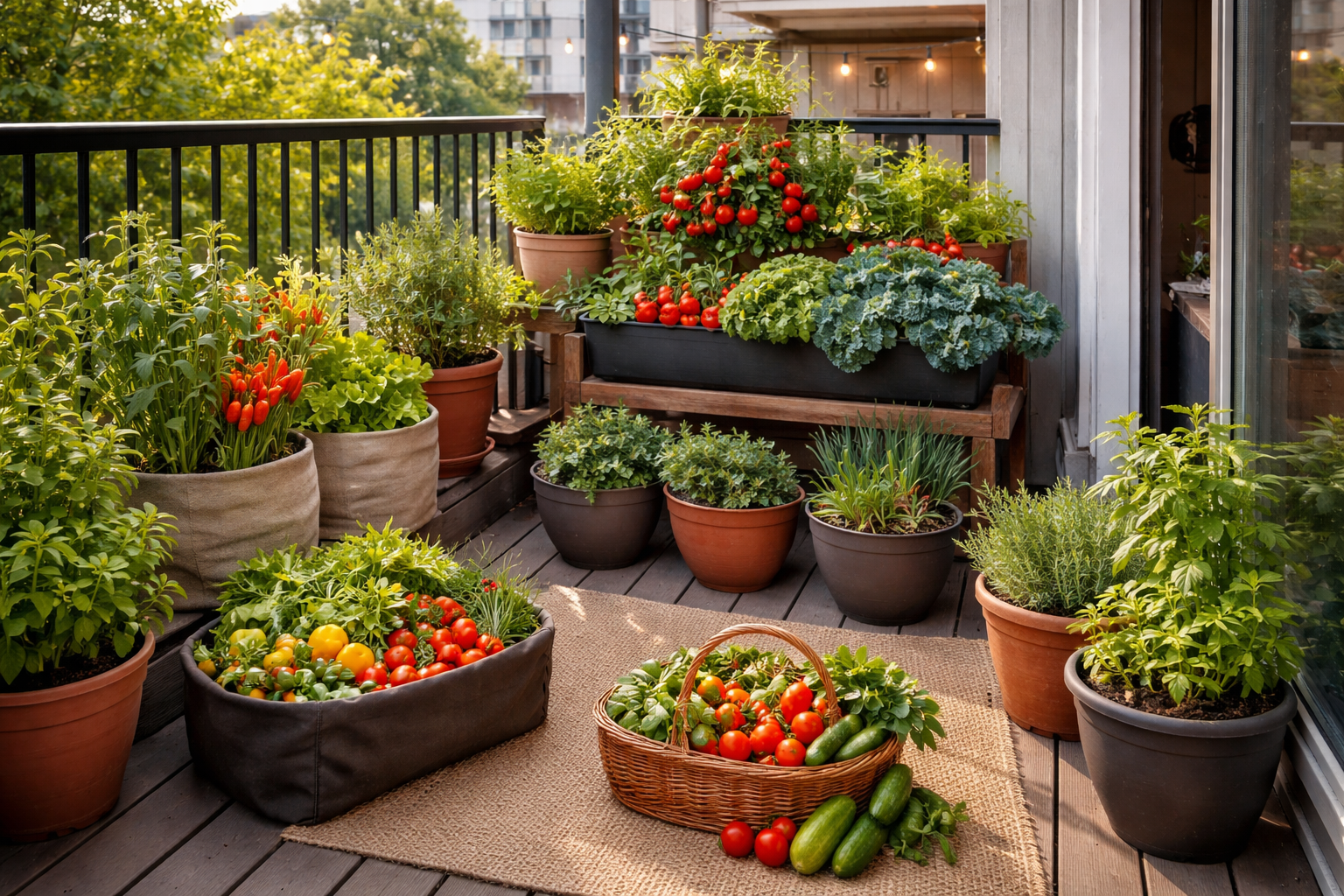
Harvesting at the right time can make the difference between a good garden and a great one. In small-space gardening, every plant counts—so knowing when and how to harvest is key to getting the most from your effort. This urban harvesting guide will walk you through simple, practical tips to maximize your yield, improve flavor, and keep your plants producing longer.
🏙️ Choosing Crops That Fit Small Spaces
Not every crop works well in a small-space garden — any good urban harvesting guide begins with helping you choose the plants that fit your space.
Large plants are typically not suitable. Crops like corn, melons, and sprawling squash need more room than most containers or balconies can provide. Trying to grow them in tight spaces most often leads to poor results.
Instead, focus on compact, high-yield plants that thrive in containers.
👉 For great options, check out our post Fast Food: 10 Fastest Growing Crops for Balcony Gardens.
Choosing the right crops is half the battle in small-space gardening. This helpful video from Ripe Tomato Farms walks through some of the best container-friendly vegetables to get you started.
🌱 Better Choices for Small Spaces
- Dwarf or patio tomatoes
- Leafy greens and herbs
- Peppers
- Bush beans
- Trellised or hanging cucumbers
👉 Choosing plants that fit your space, and harvesting becomes much easier.
⏰ Timing Your Harvest for Maximum Yield and Flavor
In a small-space garden, timing isn’t just important — it directly affects both quality and production.
When you’re working with containers, raised beds, or a balcony setup, every plant has to pull its weight. Choosing fast-growing crops for late spring can give you a head start, allowing you to harvest sooner and keep your garden producing consistently (fast-growing crops for late spring). Harvest too early, and you miss out on flavor and full development. Wait too long, and you get tough textures, bitterness, and slower future growth.
In tight growing conditions, plants respond quickly. Limited soil, faster drying, and restricted roots mean even a short delay can impact results.
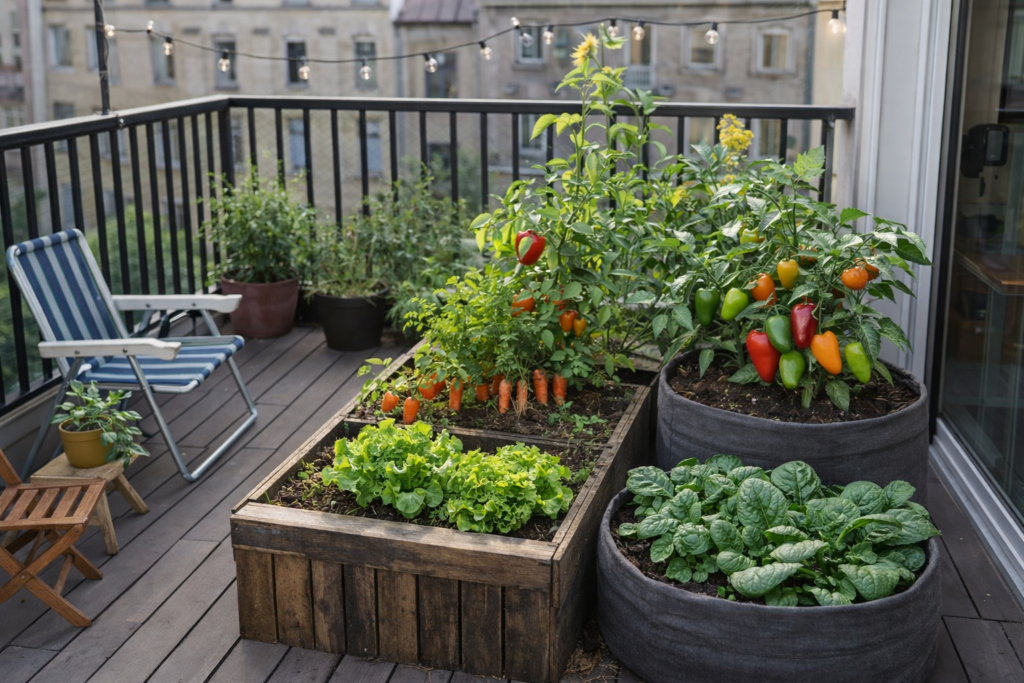
Just as important, when you harvest influences how much your plants produce next. Regular picking encourages continued growth, while missed harvests signal plants to slow down or stop producing.
Here’s how to stay on track:
🥬 Leafy Greens (Lettuce, Spinach, Kale)
- Harvest at 4–6 inches tall
- Pick outer leaves first
- Don’t wait — they turn bitter quickly
👉 Frequent harvesting keeps them producing
🍅 Tomatoes
- Harvest when fully colored
- Slightly soft, not mushy
- Can ripen indoors if needed
See our post on “Growing Tomatoes in Small Spaces”
👉 Proper timing improves flavor and supports continued production
🌿 Herbs (Basil, Mint, Parsley)
- Harvest regularly once established
- Cut just above a leaf node
- Avoid taking too much at once
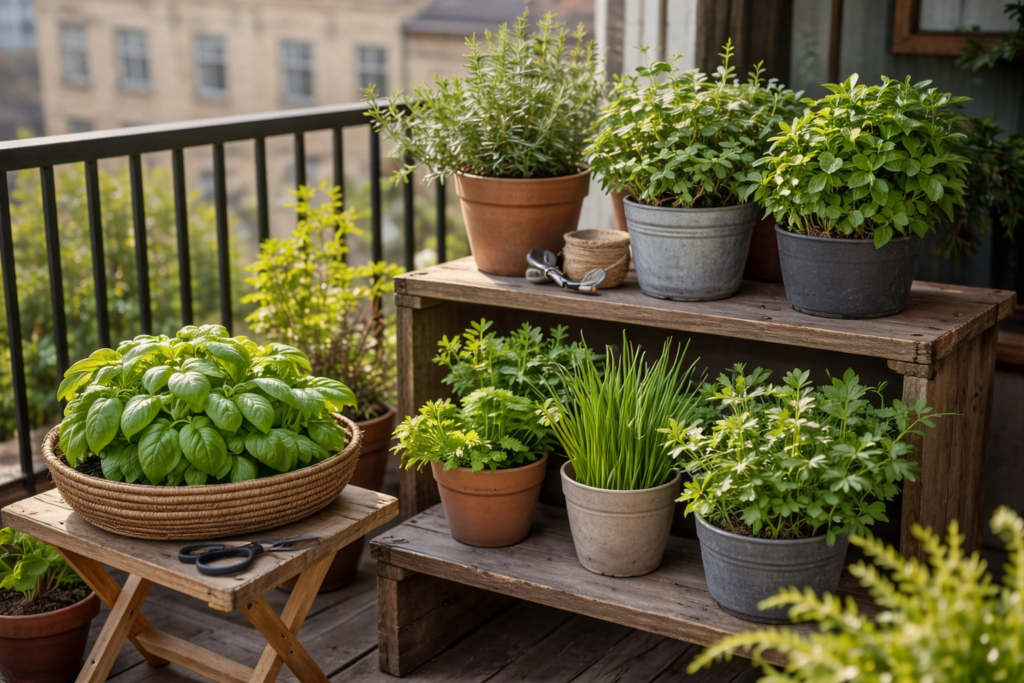
👉 Frequent cutting encourages fuller growth
🥕 Root Vegetables (Radishes, Carrots, Beets)
- Check size at soil level
- Smaller roots are more tender
- Too long = woody texture
👉 Timing directly affects texture and taste
🫘 Beans & Peas
- Pick when pods are firm, not bulging
- Harvest often to keep production going
👉 Miss a few days, and yield drops
🍓 Strawberries
- Harvest when fully red
- Pick with stem attached
- Check daily in warm weather
👉 They won’t ripen after picking
🌱 Quick Rule of Thumb
If it looks ready, check it. If it feels ready, harvest it.
🔁 Harvesting to Encourage More Growth
Harvesting isn’t just about collecting your crops — it’s how you keep your garden producing.
Many small-space plants respond to regular harvesting by continuing to grow. When you pick consistently, you signal the plant to keep producing instead of slowing down after reaching maturity.
This is especially true for:
- Leafy greens
- Herbs
- Beans
- Tomatoes
The key is consistency. Even a few missed days during peak season can reduce overall yield.
For continuous production, pairing this with succession planting can make a big difference — see my guide on succession planting in small spaces.
👉 Stay on top of harvesting, and your plants will reward you.
📦 After Harvest: Storage & Mistakes to Avoid
What you do after harvesting matters just as much as when you pick.
📦 Quick Storage Tips
- Harvest in the morning for best freshness
- Rinse gently and dry before storing
- Store greens in the fridge with a paper towel to absorb moisture
- Keep herbs in water or wrapped lightly
⚠️ Common Mistakes
- Waiting too long to harvest
- Pulling instead of cutting (damages plants)
- Rough handling of delicate crops
- Letting produce sit in the sun after picking
👉 Handle your harvest well, and it lasts longer and tastes better.
✅ Quick Summary
Harvest at the right time, pick regularly, and handle crops gently to maximize yield, flavor, and plant health in small-space gardens.
❓ FAQ Section
Yes. Regular harvesting encourages many plants to keep producing, especially greens, herbs, and beans.
Early morning, when plants are hydrated and temperatures are cooler.
Crops can become bitter, tough, or signal the plant to stop producing.