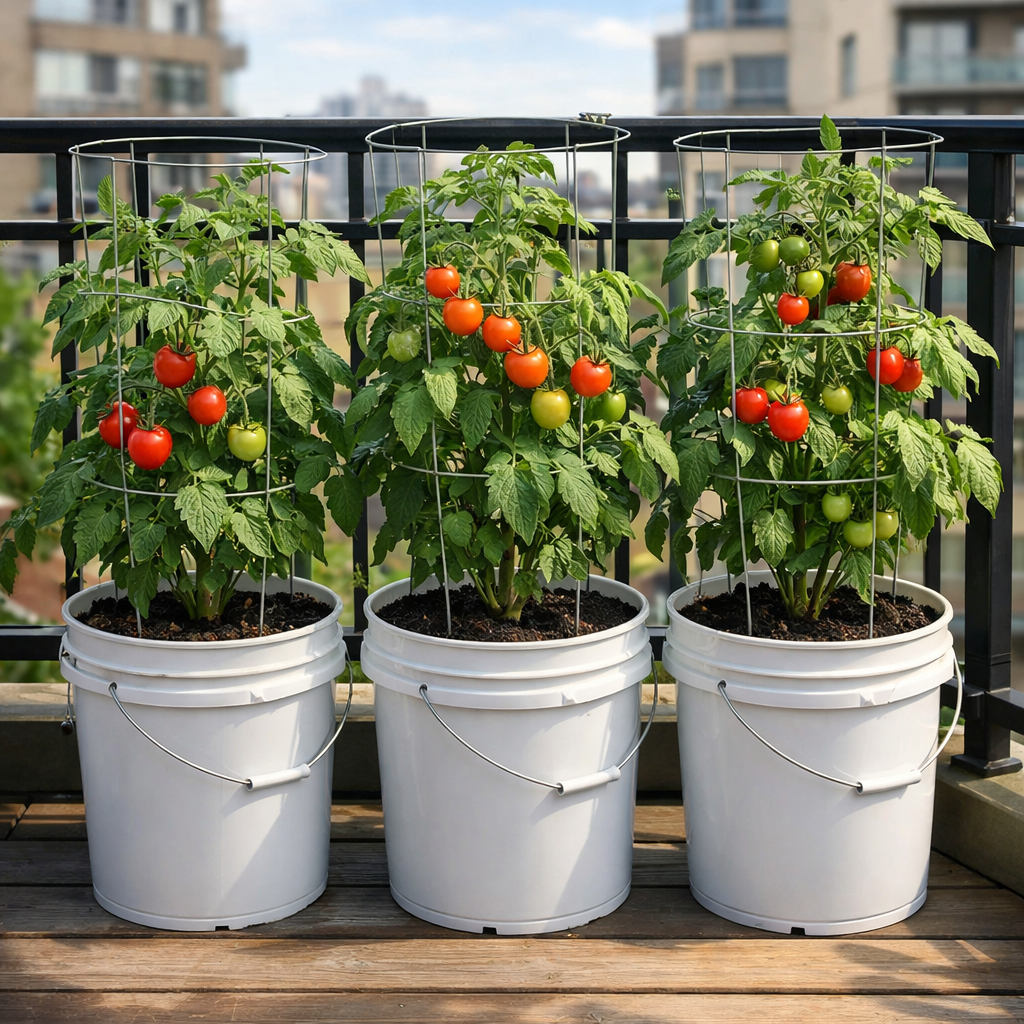
Growing tomatoes in small spaces can feel like a challenge at first—but once you get the setup right, it’s one of the most rewarding things you can do in a small garden.
Tomatoes were the first plant I ever really learned to grow—and they’re still one of the most rewarding crops you can grow in a small space. Whether it’s on a balcony, patio, or you just have a few containers, you can grow strong, productive tomato plants with the right setup.
This guide will walk you through everything you need to know about growing tomatoes in small spaces—from choosing the right varieties to keeping them healthy all season long.
🍅 Choose the Right Tomato Variety
Not all tomatoes are created equal—especially in small spaces where every inch counts.
Best choices:
- Cherry tomatoes (very forgiving)
- Dwarf varieties
- Determinate (bush) tomatoes
Avoid (unless you’re experienced):
- Large indeterminate varieties (they get BIG fast)
👉 Tip: Stick with the smaller plants, they are much easier to manage and provide better yields in containers
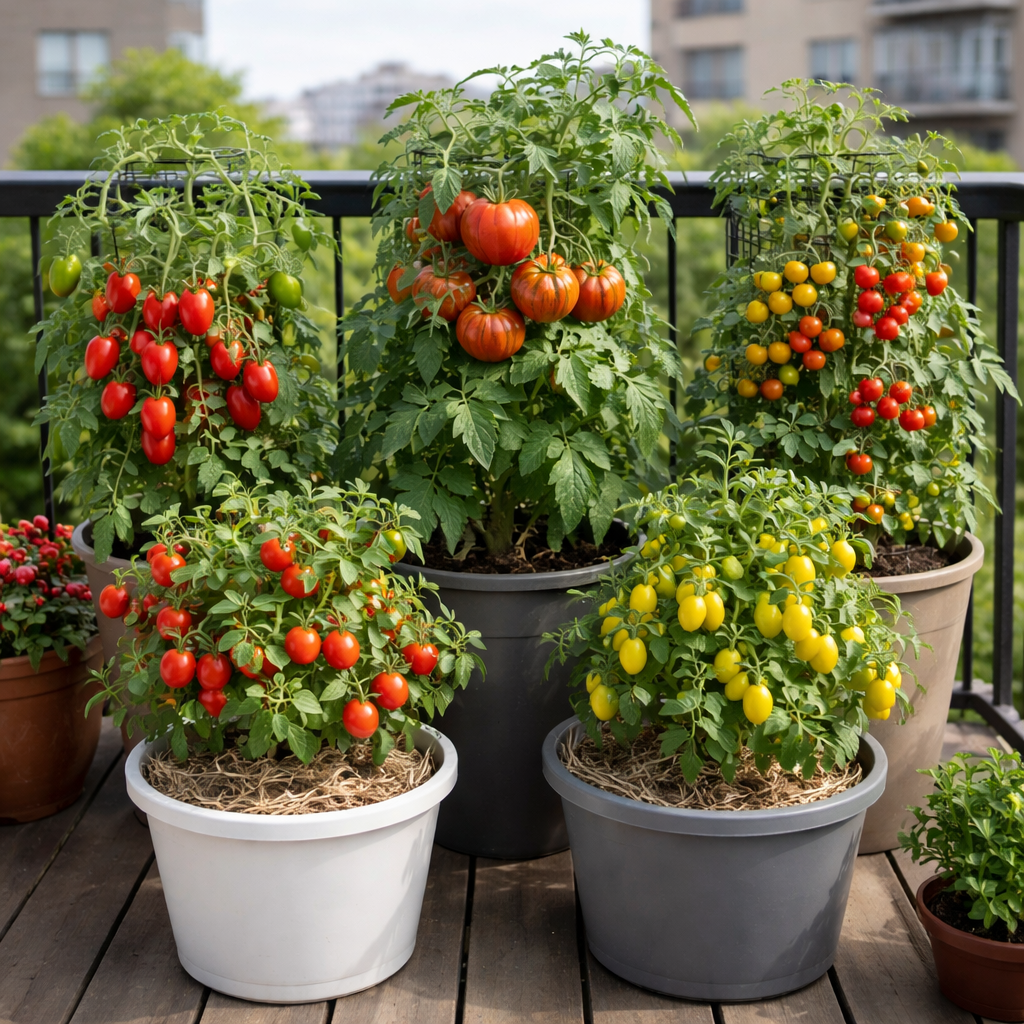
🌿 Determinate vs. Indeterminate Tomatoes (Quick Explanation)
- Determinate tomatoes (bush types):
These plants will grow to a set size, produce most of their fruit at once, and then slow down. They stay more compact, making them ideal for small spaces and containers. - Indeterminate tomatoes (vining types):
These tomato varieties keep growing and producing all season long. They can get large and need more support, pruning, and space to manage.
👉 Simple way to remember:
- Determinate = small, controlled, one big harvest
- Indeterminate = big, ongoing harvest, needs more room
🪴 Pick the Right Container
Growing tomatoes in small spaces takes a bit more planning—and a bit more room—than most container crops.
Minimum container size:
- 5 gallons (absolute minimum)
- 7–10 gallons = much better results
Must-haves:
- Drainage holes
- Room for root growth
- Stable base (tomatoes get top-heavy)
👉 Bigger container = less watering stress
For a quick reference download our printable “Tomato Pot Size Guide”
And a quick video from @armstronggarden “Large Pot, Bigger Tomatoes”
🌱 Use the Right Soil (This One is the Game Changer)
Small-space gardening lives and dies by the quality of the soil you use.
Always Use:
- High-quality potting mix
- Compost (for nutrients + structure)
- Optional: perlite for drainage
Avoid:
- Garden soil (Commercial garden soil is too dense for containers)
👉 Your soil is your plant’s entire world—make it count.
Garden Facts: Adding Perlite and Vermiculite to the soil are small additions that will always make a big difference. Perlite helps improve drainage and airflow, keeping roots from sitting in water and preventing rot—especially important in small pots that can get soggy fast. Vermiculite, on the other hand, holds moisture and nutrients and releases them slowly to keep your plants consistently fed. Used together, or separately, they create a balanced soil that stays light, drains well, and supports steady, healthy growth—exactly what small-space gardens need.
Related posts from GrowBoxGenius:
- Common Household Items for Garden Soil That Really Work (And What to Avoid)
- How to Make Container Soil That Works (Cheap & Simple)
☀️ Tomatoes Love Sunlight! (How Much Sun Do They Really Need?)
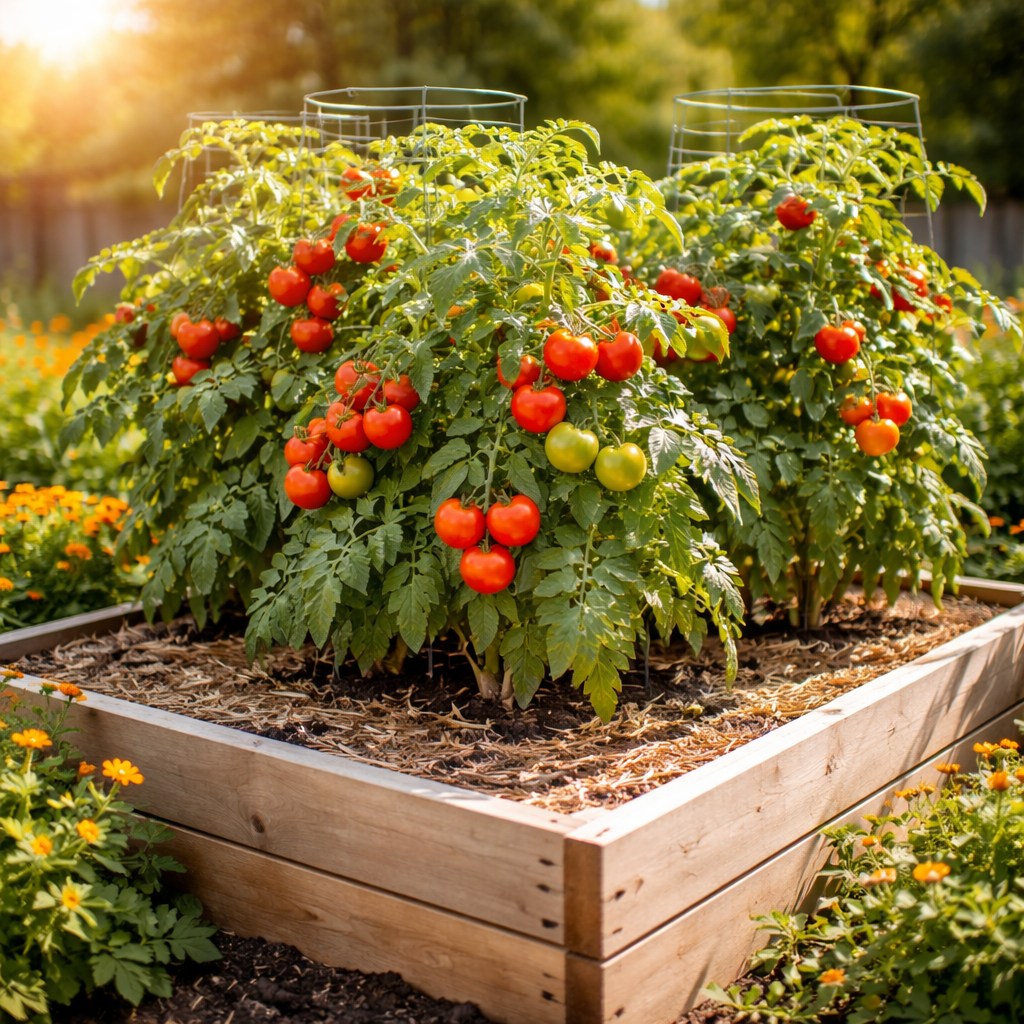
Tomatoes are sun lovers. The more the better for most varieties
Minimum:
- 6 hours of direct sun
Ideal: - 8+ hours
👉 No sun = weak plants & poor fruit production
Even in small spaces, you can help your tomatoes soak up more sun with a few simple tricks. Place containers in the brightest spot you have—south or west-facing areas are best—and don’t be afraid to move pots around as the sun shifts through the season. Keep plants spaced so they’re not shading each other, and use light-colored walls or reflective surfaces nearby to bounce extra sunlight onto your plants. A little positioning goes a long way toward bigger, healthier harvests.
💧 Watering Without Overdoing It
Watering is where many people mess up. It has caught up to me more than once.
Rule of thumb (and I say it over and over):
👉 Stick your finger in the soil! — it’s still the best moisture meter on the market, at a price that can’t be beat!.
Water when:
- Top 1–2 inches are dry. In smaller pots I keep it closer to the 1-inch level.
Avoid:
- Letting soil fully dry out.
- Overwatering (leads to root issues)
Letting your soil dry out too much can shock your plant’s roots more than most people realize. When roots go from consistently moist conditions to bone dry, they begin to shrink and start to lose function, making it harder for the plant to take up water and nutrients. And even after you start watering again this stress can slow growth, cause wilting, and even lead to leaf drop. Keeping your soil evenly moist (not soggy) helps roots stay active, healthy, and ready to support steady growth.
👉 Consistency is more important than perfection
🪜 Support Your Plants Early
Even small tomatoes need support.
Options:
- Tomato cages
- Stakes
- Small trellis
👉 Add support early—don’t wait until the plant is falling over.
🌿 Feeding Your Tomatoes
Tomatoes are heavy feeders, especially in containers.
Simple plan:
- Always start with good soil
- Add a balanced fertilizer every 2–3 weeks
- Supplement with compost if needed
👉 If your plant looks “hungry,” it probably is
🐛 Common Problems (And Quick Fixes)
Yellow leaves?
- Most often a watering or nutrient issue
Wilting?
- Check moisture first
No fruit?
- Usually not enough sunlight
👉 Small spaces amplify problems—but also make them easier to fix quickly
🍅 Harvesting Your Tomatoes
Growing tomatoes in small spaces is a little tougher to do, but it’s worth it and harvesting is the pay-off for all the hard work. Pick tomatoes when they’re:
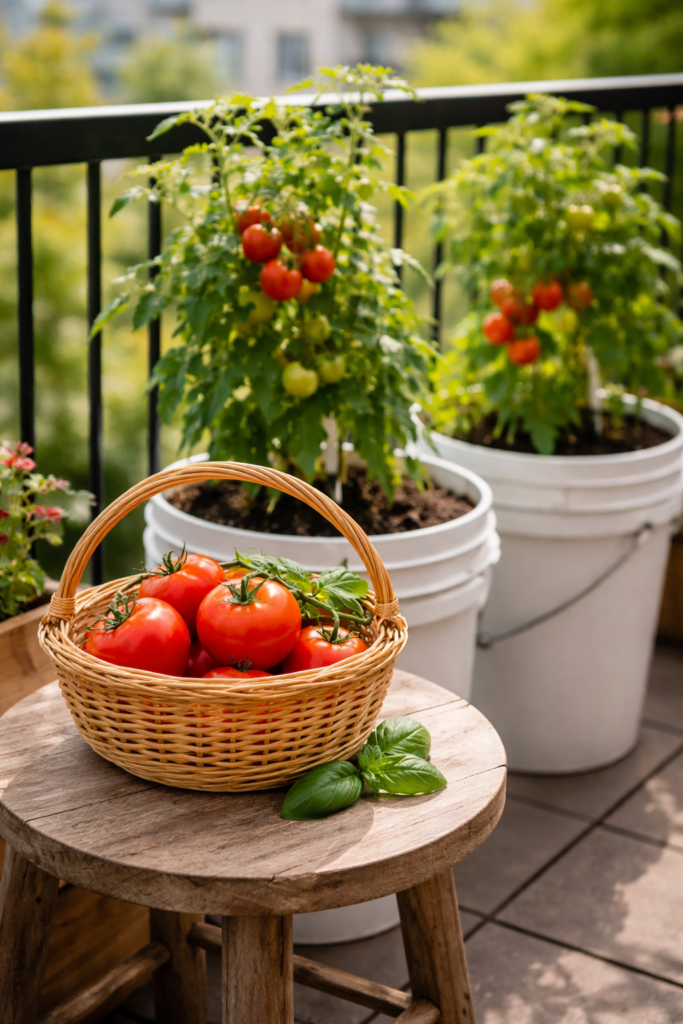
- Fully colored
- Slightly soft to the touch
👉 Frequent harvesting encourages more production
✅ Quick Summary
- Choose compact or cherry varieties
- Use at least a 5–10 gallon container
- Start with high-quality soil + compost
- Give your plants 6–8+ hours of sunlight
- Water consistently (don’t guess—check)
- Support plants early
- Feed regularly
❓ FAQ Section
Yes, but bigger containers (5–10 gallons) produce much better results and healthier plants.
Check daily. Water when the top 1–2 inches of soil are dry.
Cherry, dwarf, and determinate varieties are the easiest to maintain and are the most productive.